Andrew Mayne: Hello and welcome to the Weird Things Podcast. I'm Andrew Mayne, joined by Justin Robert Young. Hello, friends. Brian Brushwood: And Mr. Brian Brushwood. Man, I'm so glad that I took two weeks of this vacation because I thought maybe finally we'll have something interesting to report on on the Weird Things program. Maybe finally something interesting happened in the world of the future becoming the now. Andrew Mayne: So, yeah, and I'll let you lead with it. Brian Brushwood: Oh, man, I've been out of town. All...
Read full transcript
Andrew Mayne: Hello and welcome to the Weird Things Podcast. I'm Andrew Mayne, joined by Justin Robert Young. Hello, friends.
Brian Brushwood: And Mr. Brian Brushwood. Man, I'm so glad that I took two weeks of this vacation because I thought maybe finally we'll have something interesting to report on on the Weird Things program. Maybe finally something interesting happened in the world of the future becoming the now.
Andrew Mayne: So, yeah, and I'll let you lead with it.
Brian Brushwood: Oh, man, I've been out of town. All I know, all I know is while I was out. Brian's like, like, oh, yeah, sure. Like, I'm going to throw this no look pass because I know Andrew has got it, got it going on. We're going to look professional. We're going to look awesome. And Andrew just farted and watched the ball.
Andrew Mayne: No, no, no, no.
Brian Brushwood: Well, here, I'll pick it up. I can vouch for the fact that I really wished that we were doing the Weird Things Podcast while I was on the road because I was trapped with the Amish Mafia. The Amish Stassi were looking over my shoulder as I had to go hide around corners to try out the new voice model and the new 5.6.
Andrew Mayne: Hold on, hold on. For those of us just listening now, you just set up this very interesting, I wonder who this is.
Brian Brushwood: Oh, yeah. No, it's my daughter's, which is why. Hold on. Let me see if I can find Justin's helpful guide. Before we get to that, let's set it up. Your daughters, like many young women, have, by polling, have a disproportionately negative view of artificial intelligence. The reasoning can be debated forever, but the reality is unquestioned, at least in your world. If you are suggesting that, like, you know, you're on the road, you can just hit the voice model, you can ask it a question and get an answer. If you try to do that, what is the reaction from the rest of the party? If I am lucky, the rest of my daughters will respond with fart sound effects and the word boo. That is about the high end. Beyond that, depending on the time of day, there may be an insistence that we have a deeper conversation about just how all the negative externalities of this transformative technology. Gotcha. So it's, like, they will not stop you using it, but they will make you feel, they will make it as uncomfortable as possible. They will extract the troll toll. In a struggle session to have you understand exactly what you've done. Yes, or are doing, or why it's dumb, or any of that stuff. Which, again, look, I don't begrudge anyone as questions or as statements. Like, is it, like, did you know, did you know, did you know, or why do you, why do you, why do you? All of the above. Again, everything. Yeah. The whole buffet. It's enough that I, you know, it's like, I don't know, the thing that pictures my mind is it's become a sneaky vice that I don't want to do in front of my daughters. Yeah. Oh, we have Sir Gene. We have Gene Naftuliev in the chat. So you are, you are on the road. Yeah. And you are not able to, you're not able to interact with this. Meanwhile, all these new models are coming out and I'm texting with you. Well, yeah, and it's like, all I want to do is, is see what new capabilities have gotten unlocked with the new 5.6 model. And, and then Justin, and, but I'm complaining about how my daughters don't want to see me doing it. So Justin very helpfully gives me a demo by sending me custom URLs of entire websites that say, so you'd like to play with the new chat GPT model, but your daughters hate AI. And then, which goes on to make like really good points, like take the objection seriously. Did you know that there's, these are the studies connection before correction? Listen, have a conversation, don't try, which again, of all the tasks, if I was trying to write an opening scene for Skynet, the first thing I'd do is have it be really good at convincing humans on how to handle Skynet taking over. Was it effective? Oh, I didn't. I mean, it was effective at making me chuckle. I did not.
Andrew Mayne: You're too, too afraid. This is how jihad works.
Brian Brushwood: Yeah. Yes, exactly. It's a credible threat though. This was, this is why Mao's student revolution succeeded. Yeah.
Andrew Mayne: We had a lot of stuff going on. Again, I apologize, folks. It's going to be an AI talk if you're not an AI, but guess what? It's going to be an AI talk is the most important story of the day is AI. We had the release of OpenAS 5.6 model, which is an incredibly capable model. And we're seeing this sort of different strategy between them and Anthropic. Fable, great model. People love Fable. Fable is also a very expensive model to run. And Anthropic users are kind of heavily throttled in their ability to use it. OpenAI developed 5.6, which is their approach towards let's make a model that's really efficient, which is basically takes less compute to run. So you get to use it more and both are actually very comparative in benchmarks, but then they have a different feel. You keep asking people who use both, which one's better? And they're like, they're different. And that is a place where we are now where instead of models converging, we're starting to see differences there. And what can make a model different? One is just how out of the box smart it is. One can be how well a model plans something and says, okay, I got this. I'll do it. And Fable's known for kind of doing that and then going off and just executing it. Other models are known for their, you know, I think OpenAI models are known for being able to be a little more flexible in how you work with them. Not this, do this, do this, do this, then be like, okay, yeah, let's try it that way. 5.6 is a very tenacious model. You give it a task and we'll figure it out. I have been amazed by, like, I'm running, you know, I've got a project with Justin involving, like, dealing with a large amount of data and just having, where I have to deploy, like, GPUs in the cloud to do it. And now I can just have 5.6. We'll just figure out the cost, go find the best provider to go do it, upload the stuff to the cloud, bring back the measurements, come back and do it to me. And I'm just doing a couple little prompts. It's incredible.
Brian Brushwood: There is, I would say, and this is going to increasingly sound weird as we ascribe human-like characteristics to the model, but they're designed to emulate human-like tasks. You begin to notice, like, levels of initiative, follow-through, owning the task, following the thread, understanding the implied meaning behind a series of seemingly unconnected questions. You definitely can see the difference in that with 5.6. Yeah.
Andrew Mayne: It's going to be an interesting sort of period of time here as we watch how we use these different models. I, so, my wife, I finally got rushed to start using Codex. And the thing that really woke up for her was she saw this retweet of a person that had Codex go through her photos, find all of his outfits, and put together a website that lets you do outfit matching. So, Roshni took a screen grab, and she went and said, okay, try to do this. And it started it. And then he put it all on GitHub, and she copied that. And I look over, and she's got the whole thing running. It's a site. It's doing this whole thing. It's took all of her clothes. It's using the image model to do those versions of her and help her plan and match outfits. And then she starts adding features. And we're laying in bed, and I look over, and I see her doing the thing I do. She's got her phone, and she's whispering to Codex on her phone, telling her what to do. It's everything I've been doing for months now. Like, ah, I need you to take a look at that, then update this, and try this. I need you to add this one here. I need this one here. And so I think we're entering a world of, like, secretly talking to our AIs.
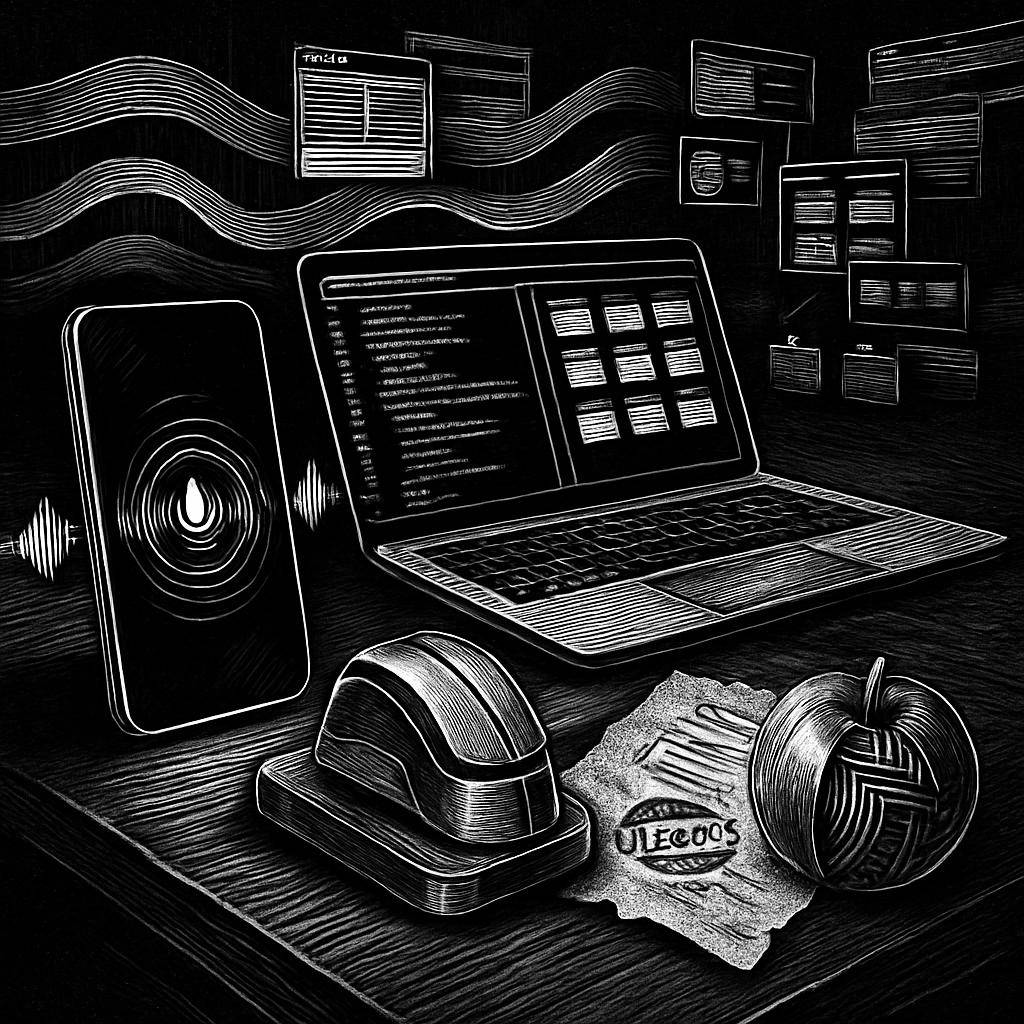
Brian Brushwood: Have you seen the new, like, almost looks like a, like, Hellraiser, like, connectivity thing? It's like this, like, feed bag thing so you can be in the office and just be exclusively talking to your AI. But, yeah, it looks ridiculous. Not to say that engineers have ever stopped letting things that look ridiculous get in the way of their optimized coding preferences. But this apparently is now a new way to go about it, as the models have gotten really, really, really good. Not only at transcription, to the point where now I hate using anything else that doesn't use OpenAI's transcription. But also just dumping a bunch of information in there and letting the model figure it out. But, yeah, that's it. That's funny.
UNKNOWN: Yeah.
Brian Brushwood: Yeah, but now it's so funny. Now, I'll tell you what. If those were the masks during COVID, I would have worn them. If I could just be vibe coding all day, I'd be like, yes, slap them on me. Like, Bane, do you feel in charge? Yeah. Yeah, I don't know. That's my recommendation to anybody now is, number one, use the ChatGPT app or ChatGPT work. I don't know if they've officially renamed it or whatever. But use that. Let it edit things on your desktop. Talk to it. Don't type. And also, don't tell it your solution. Tell it your problem. And then let it do the rest.
Andrew Mayne: They have updated the model. I would say we're in a very transitionary period, so things are kind of confusing. They're updating things often. That was one of the things that was frustrating for the ChatGPT app. It became Codex and Codex being ChatGPT. And everybody that opened, I was like, yeah, that'll make sense. And I'm like, I don't know, guys. I'm still trying to figure this out. They finally, what they did is they've updated this now where within the app, you can switch between Codex and ChatGPT. And if you pull up ChatGPT, it'll show you, like, you can pull up your conversation history, which is a lot more helpful. But, you know, they're, you know, developing this in real time. So we'll see. And part of the problem is, too, is sometimes you start things in the cloud, and they're in the cloud. Sometimes in your chat, I'm still trying to figure it out.
Brian Brushwood: So we also got that new voice model that allows the full duplex communication and can listen while talking to you.
Andrew Mayne: Yeah. So, yeah, they have the new voice model. And what makes that special is it's called, like, basically a speech in, speech out, where instead of normally what happens is, as you talk, you have a transcription system that's turning into text. And then sending that to the model, the model sees the text. This is a model that takes your voice and responds directly to that with voice out. So it's a lot faster. And you can do some cool things, like interrupt it, you know, have to have it stop if you say a certain word or whatever. It'll go, oh, you said the word. And you can do it for real-time translation, which can kind of look cool in demos. But when you try it in person is you have two different languages speaking at the same time, which is, you know, can be a little bit overwhelming. But very, very cool. And if you put it in instant, you can adjust thinking. So if you put it in instant mode, it's, like, really fast. Little tip is if you put it in instant mode, it's very fast. And it can actually detect, like, timbre and tone and high pitch. If you go into thinking mode, then what it's doing is going to take the transcript and evaluate that.
Brian Brushwood: I'll say it's phenomenal for one of the things that I've always kind of wanted with a quick trigger voice assistant, which is, like, news, real-time news. They built in a tool that was, like, I initially tried to build myself after the voice model came out on API and involved tool calls, which was just, like, tell me what's happening in the game right now. Whatever the game is, you know, the game I kind of half care about, but I just want to know what the score is. They now have a built-in, a really good built-in tool for that that does not really make mistakes. It's pretty phenomenal. If anything, the only problem I have with it is that it's a good enough tool that it makes me want the next level of stuff that it does not do. So it's, like, right now I get so much worth out of having all my health records, my financial records, and then all my projects in one place that when I'm having this easygoing conversation with this voice model, all I want to do is just start asking it about the things that I know. That you know that if you just type it instead of saying it, then it could. Like, I ran into that where I'm like, hey, check my email for that one thing with the whatever. Like, I would say it into another thing that I have to hit enter on instead of just having the conversation. And it's like, oh, sorry, I don't connect to that. And I'm like, oh, boy, just whatever. Fine, full access to my life. Like, just give me the pill that I have to swallow and just control my liver.
Andrew Mayne: I have found myself at times, like, looking for an object in my room and trying to figure out, like, what's a prompt.
Brian Brushwood: Yeah. Well, as a matter of fact, I don't know if I told you, one of our guests at Founders Day was talking about how, as an experiment, he has a locally run model that he just made a game of day after day just chatting as though it's a friend in the room and having it just listen and pay attention to everything and take pictures of things or whatever. And then he had a moment where in talking to it like a friend, he said, okay, I'm going out to the hardware store. And being chatty, the LLM said, well, oh, what are you getting? And he's like, oh, I needed a so-and-so saw. And he said, you mean the one that's up in the upper left-hand corner behind the so-and-so in your workshop? He's like, what are you talking about? He's like, remember you sent me a picture of it? Here, go look. And he walked over there and he already had the thing that he was going to go get. And of course, you know, for every one moment of serendipity like that, who knows how many other moments we've all walked past on that.
Andrew Mayne: That's cool. I'm just delusional in it for a moment. I'm thinking I can just like hit something in real life and be like search, you know, I'm such and such book. Like I get so used to my brain just going, oh, just do this, do this. Because like, it's responding to my email and doing all this now. And then I get to have to do a physical task. And I'm like, oh, I have to look for this. I didn't have the foresight like Brian's friend to actually, you know, do that. But I'm just literally going through some sort of delusion space.
Brian Brushwood: Okay, hold on, hold on, hold on. Signwave, one of our dear, dear, dear friends, and I love Sign, but he's like, oh, you want to know what does do that, Siri? I just downloaded the new beta for iOS. I am not able, I asked Siri, are you conversational? Nothing. I asked Siri, what am I looking at? Which, by the way, what I was looking at was my ChatGPT instructions as to what the new iOS beta does. It said, would you like to send this to ChatGPT? And I said, sure. So it sent it to ChatGPT and ChatGPT told me that it was a list of things that the iOS beta does. So I don't know whether I'm doing something wrong. I am always willing to admit that this is likely a user error, but, like, so far, the frictionless onboarding of the new Siri is not there for me. If I remember correctly, what Sign's talking about is the one that comes on the dev kit, and it takes, like, a week of indexing. So if you haven't had it cook for a week, then you're not doing it. But, well, then I will, yeah, I'm on the beta, so that's the developer beta. Do I have to, do you have to have a developer account, or is that, what should I do? I mean, you can, yeah, go to Codex and say, create a developer account for me.
Andrew Mayne: Oh, really? I'm excited about this. You know what I'd love to? I would love a way to search for things on my Mac. Yeah, that'd be fun. Yeah, that worked. That reliably worked and kept it indexed.
Brian Brushwood: Oh, cool. Is it iOS 27 public beta, or, or, interesting. Here, whatever. I'm doing iOS 27 public beta. Why not? Live on the air, folks. I'm going to get a tattoo. YOLO. Yeah, look, I would love it. I want all my things to be smart, and ideally, I would love for all of them to talk to each other. Like, you know, that's, I don't, I'm not provincial here. I just want things to work. I do know that I appreciate where OpenAI is and has been, and so I like what I have collected there, and they keep making tools that I enjoy. Anyway, but, but yeah, I don't know. I just, I just want, I want things to be good. I want things to work.
Andrew Mayne: I have a little, a little hack, if anybody's interested in it. Heck yeah. If you have a Mac, if you have a Mac, it's super useful. What I've done is, I like to make voice notes, and I build all kinds of apps and stuff, but it's just, I don't like having my voice notes spread everywhere across a bunch of different stuff. The iPhone has a voice notes app. It's not a great app, but it does record voice notes, and I found that I could just tell Codex to create an automation. Every hour, go on my Mac and go look for the voice notes that are there, they're synced via iCloud, look for any voice notes, and then use the Better Transcription as an API for the OpenAI transcription to go transfer. Actually, I have a local model running here, local, like, local model running. Just transcribe them, and then create note, like, summarize them or create titles for them. So now, basically, I put them all into a folder. So I have a folder in my Documents folder that has all of my transcribed voice notes. It just happens automatically. Wow. That's free. You know, it's free. Free. You know, just run it for free. And so now, everything I know, it's backed up in iCloud, and then it's, you know, I have a transcript there, and then Codex knows where the box is, and I can say, oh, what were my good ideas for books? And they'll be like, none. You suck. I'm like, man. I changed its head.
Brian Brushwood: You're a fraud, and eventually you'll be figured out by me. We know that voice notes do automatically transcribe on device, but it's a bad transcription. It's not as good as the other transcription.
Andrew Mayne: It'll also leave, and it leaves you a title. The title is just your address, you know, or whatever you're at, you're recording. Oh, yeah. And so you don't, you don't, you don't get a title there. You don't get anything like that. And so what I can do is, I can actually have it do that, and I can have it slide it into folders. I can say, oh, this looks like a book thing. Put in a book thing. Put this here. So basically, just have Codex handle the back end of that. My notes are still saved, so something could, whatever. I'm not paying for any other service. I'm just using iCloud with Codex, and it's pretty awesome now, because now I'm just like, oh, I just make a voice member.
Brian Brushwood: I'm just so pumped that I lived long enough to never pay for the fact that I am the worst organizer of all my files on my hard drive. Like, it just remained an absolute rat's nest of BS, and I lived long enough for a nanny, for Rosie the Robot, to come in and put them all in neat little rows, and I'm very excited. Have you done, have you had Rosie clean it up yet, or is that, like, the moment that you know it can be cleaned up, it obviates the need to clean it up? Because I'm in the second category. Mostly the second. Yeah, the second. It's like, yeah, just whatever. It just will be able to pull the thing that I need when I need it. Yeah. I should just tell it to clean it all up, and like, hey, use best practices to make this the most efficient, and I don't quite have faith in the robot. It's like, you remember that scene in the Westworld TV show in the first season when, like, the Anthony Hopkins creator, like, you know that he has created the perfect Westworld robot because it's shaving his neck with a straight razor? Like, I haven't quite gotten to that level into telling it to delete unneeded files off of my hard drive. That will be when I fully trust it, when I'm like, look for duplicate files and just delete them to clear storage.
Speaker 02: Yeah.
Brian Brushwood: Or just, I don't know, find the cheapest storage around and upload all of it and then delete it off my hard drive and keep a permanent change record or something like that. I don't know. I don't know what the best solution is, but I know that it will happen a lot easier. This is like the bureaucracy buster is really, to me, the number one thing that you can bring to anybody regardless of their skill level with AI. Like, I got an email yesterday, an annual email that I get where Squarespace tells me, hey, there's four sites that you have of varying different levels of importance. And they're all designed like a pile of crap. You've moved most of the stuff that you have off it. The stuff that you are, that you do have now, like, is out of date. But what are you going to do? Figure that out? $800, please. And I pay it yearly. Annually, I look at that email and I say, ah, when I get some time, I should really figure that out. And then a year goes by and then I pay them another $800. Not yesterday while I was sitting at the Amex lounge in SFO waiting to go home. Nope. I was like, create a escape plan and put a calendar invite in for the next day so I can remember to make sure that I execute on said escape plan. And it is currently working right now. I've created two different websites, one for Raise the Dead, one for myself, and is migrating the one podcast that I still had on Squarespace. Eh, you will not be getting my $800 this year. I feel like, you know, Paul Greengrass has that new movie that's got a trailer that's out where Andrew Garfield is a peasant who leads a revolt against the king. That's what I feel like, like the king's men have come for their tithe and I have said, nay, sir, not today, sir.
Andrew Mayne: Yeah, we did that with, you know, the Weird Things website, which, I mean, for a considerable amount of time that I spent on it, it turned out fine. I moved it over from WordPress. WordPress just got to be increasingly buggy and once upon a time, people used to use comments as blogs. Now blog comments are terrible. They're garbage. You don't really need them. And the purpose of WordPress is really questionable. And moved it, was paying several hundred dollars a year. Now I pay like, I don't know, 80 cents for Cloudflare to host it. There's a reckoning coming. There's a reckoning for a lot of these services that I don't think delivered on value and just counted on the idea that you just keep saying subscribe, redoing it. And Codex was able to manage RSS, all this other stuff. As far as I know, if there's an issue, we'll fix it. But, you know, that wasn't also like, you know, you're paying for stuff like WordPress gets crazy because you put in a WordPress site and they're like, you know, sometimes it's not, you know, they're hackers and you should pay this, you know, $30 a month for this thing to protect your WordPress site. And it's like, oh, wait, that's your crappy code created this problem. And now I'm paying you more. And I watched, you know, the creep that we're paying for our hosts and all that. And it was just, I was paying, I think I've saved over $1,000 a month easily so far. You know, so now I've, you know, been spending that back and other crazy products.
Brian Brushwood: I will say for sure, the usages that I've gotten on the $200 a month plan for OpenAI has been a net earner for me. Like paying that $200 has made me money. Not only have I covered that $200, you know, I'm about to knock out four months of it. Like in one afternoon, four months of it for the year cleared. But between that and the finance stuff of just random, random subscriptions that just kind of pile up and it's like nip, nip, nip, nip, nip. Get them out of here. Anyway, yeah, it's fun. It's a good time. Hey, do we want to talk about Apple suing OpenAI? That's a fun one. We talked about Apple. We talked about OpenAI. We should talk about the fact that there's a lawsuit between them. You can talk about it. So there's a lawsuit between Apple and OpenAI, which I predicted. I will note that I predicted this. I saw it in my crystal ball months ago. Oh, is this because OpenAI is just gobbling up Pokemon straight out of Apple's folder? There's two main charges that are in the lawsuit. One, an employee that at least if we were to take the claims that Apple listed seriously was far too loose with going back and getting old information that he had while he was still an employee at Apple and even giggling and bragging about it. And then another more serious charge that the new head of hardware for OpenAI, which had been a hardware chief for Apple, was too aggressive in asking people that were coming in from Apple to bring hardware designs or physical hardware. Now, obviously, this is what Apple was claiming. We'll see what OpenAI says. We'll see whether or not this even makes it to court or if it's something that winds up getting settled. But the reason why I thought it was coming is because Apple's way behind. And I think part of the reason why Tim Cook isn't there anymore is because Apple's way behind. And if you are the new incoming CEO, I think part of the reason why the board would select you is that you're going to take a harder tack and you're going to look at this world and not think that you're just the unquestioned winner and you have the right answer in the basement somewhere. Because guess what? It's been a while since you've had the right answer in the basement. That ain't what it used to be. And they need to apply themselves in a different way. And considering what I heard anecdotally through like family friends was that the Apple design department was pretty demoralized because a lot of their top talent had kind of left over the last several years to work with Johnny Ive, who is now with OpenAI developing their hardware. He is, for those of you who are unaware, the guy who developed the physical look of every iconic Apple product after, you know, 2000. And so, you know, that's where they're going to start. Ive is not mentioned in the lawsuit. And there have been people that have written over the last few days that this is maybe not the blockbuster that people were initially saying that it was when the documents first dropped. But still, it is the most formal thing, the formalization of what we have known for a while that OpenAI views itself as having at least part of its future in hardware. They're very serious about it. They have brought in top talent to execute on that. And the model that they are going for, the lane that they are going for is not the Samsung model. It's not the Google model. It's not anything but the king in its chrome polished UFO down in Cupertino. They want the Apple model. They want the premium, you got to have it, it just works level type of products. And, you know, they're going to be head to head for a little bit. We'll see where this particular lawsuit goes. But the rivalry now is unquestioned.
Andrew Mayne: Yeah, there was issue with like the Apple initially had got the names of the employees wrong and infused emails and stuff. So we'll see. We'll see.
Brian Brushwood: Yeah, there's another version of this where you can, there's some very interesting, you know, kind of court of public opinion on both sides. Everybody's trying to frame things the way that they would like for it to be framed for maximum press consumption, which is probably a story for another day. But it's, it is, it is interesting.
Andrew Mayne: Yeah. Uh, other news, uh, the new Kimi model came out. Um, and, uh. What's Kimi? Kimi is a model made by a company called Moonshot, a Chinese company. And, um, it's, uh, interesting because, uh, the model, uh, looks like it's doing really, really good. Highly, highly capable model. And, of course, um, those of you who may recall, a few months back, Anthropic issued a scathing announcement titled Detecting and Preventing Distillation Attacks. And, uh, I mean, they had their facts straight, you know, as far as we know, was they've listed all the companies that were doing distillation. Basically, distillation, the way this works is, there's training on just raw text, the internet's one thing. It's another thing, if you have access to a model and you say, think about this problem really long and tell me what your solution is for it. And then you take those thinking traces and then you use that to train a new model. Now, what AI companies do is they say their terms of service, hey, you're flat out, you are not allowed to do this. You cannot do this. This is copyrighted material. You do this explicitly. Like, it's one thing to take a copyright, something like a book, and use it for a different, a transformative purpose. But when you're taking, you know, if I want to learn from a book or whatever, that's arguably one way to do it and to try to learn something new or to create some new work. But when you're like, no, I want to take your model outputs and create a new model based upon it. And also, when your agreement with the company is, I will not do that. I'd say that's really what it comes down to is it's not publicly available information. It's literally, if you create an account, you say, yes, you agree to not do it. But Anthropics said, hey, look, here is, in the case of Moonshot, they did over three million different exchanges where the whole purpose was to extract this information from their models. And they were able to match it to public profiles of senior executives. And then they talked about how Moonshot kind of used an even more targeted way to do it. So they have been, Anthropics, very much saying, Moonshot is trying to copy our models. And today, you know, this week, we just had the new Kimi model come out, which is a readily capable model. Really great model. Very, very, very good. Cutting edge and approaching capabilities, I think. I still think they're months behind when you look at actual usage. But these months behind is still a fantastic model.
Brian Brushwood: Yeah, if you ask it what its name is, what does it say?
Andrew Mayne: Well, one person said that. I don't have any independent verification of that. So I was trying to chase that one down and tried to ask Kimi itself to do it. Kimi wouldn't, did their capacity right now. So one person said they did it. I've not seen replication. Historically, those models, what I did, and I'm finding themselves as other models. You know, it used to be you would get the model, like early on when OpenAI was the only leading company, the Chinese models would say that they were ChatGPT because they were just copying ChatGPT outputs. Now, that changed and started to say, oh, I'm Claude or whatever. I think they kind of just ended up putting filters in that because like I just, I saw somebody say, oh, it said it was Claude. But I'm like, I don't, I believe, it may think internally it's there, but I'm pretty sure they figured out the filter it out by now. And I think they trained it on enough different stuff. And again, here's, here's the situation is there are incredible Chinese researchers, absolutely brilliant people working at labs, both the United States and America, sometimes working at labs in America, then going back to work at labs in China. And some very incredible people, you know, are trained in key or whatever. They're absolutely super, super smart people in China building things. And Chinese labs are doing some really great innovative techniques in AI. You can't discount that. But also, you can't just say that's the only reason that they're, you know, building these competitive models. They are rampantly, this is what Anthropoc Point, rampantly copying outputs from American models in a way that other American companies don't presently do. And that is also one way to sort of help bootstrap your thing. It's also why they can come close, but never jump in the lead, because, you know, copying will only take you so far, although there's some pretty innovative techniques. There is also a very highly organized Chinese government campaign to exfiltrate methods and secrets from American frontier labs into Chinese method technology. And I have seen behind the scenes very compelling proof. And some things that people said, oh, man, this Chinese company came out with this great method. That's so great for them to share with it. I'm like, well, that method existed a while ago and was a secret technique. And then some people left the lab and then it ended up elsewhere. So it's a complicated, murky story. I don't think it's easy to go. Some people would, oh, the Chinese are just copying. No, that's not the case. They are doing that plus their own innovation and doing some very clever stuff.
Brian Brushwood: It's hard to be a frontier lab, though. I mean, a lot of people have put a lot of money into doing it, and it takes a special kind of alchemy.
Andrew Mayne: Yeah. Well, yeah, we're going to see things happen. I think the next few months are going to be very interesting. I think we might start seeing some big differences there, because some of the really big compute stuff is going to start to pay off. But we saw how much Grok struggled, like Grok just really, really struggled to build a really capable frontier model. This was the point two years ago, Elon fans were going to be telling you, like, oh, he's going to be in the lead by now. Nope. Not even a comfortable third. And he can throw a ton of compute at it. They've got great teams there. He brought in Cursor. I'm convinced that they're capable of doing great stuff. I don't want to write them off. I've just said it so far. People keep saying, you know, don't count them out. I'm like, I haven't counted them out. But I haven't actually seen them. I don't want to go way up ahead. Right now, it seems to be between Anthropic and OpenAI. Google even. Google, Gemini 3.5 Pro or whatever.
Brian Brushwood: Keeps getting delayed. Oh, there was another, or the first model from Thinking Machines came out, too.
Andrew Mayne: Yeah, they put out a model. It seems like a solid, good debut model. They used a base Chinese model, I think, to train it. And then they did their own training. Super smart people at Thinking Machines. I mean, some former colleagues, so they're really nice people, great people. They're kind of, I think, the big ones championing, you know, the open source effort now, you know, in the American one. So good on them for doing that. Seems like a very robust, capable model. And part of what Thinking Machines is going to be doing is, basically, a lot of companies that want to create custom models that they'll handle that. They wanted to have a really good base model to start with. So great work for them.
Brian Brushwood: Yeah. The question is this. I think there might be, in the future, a good business in red-blooded American open source models.
Andrew Mayne: Well, you know, if two things happen, one is there's been talk that the Chinese government might decide that they want to stop exporting these models to the U.S. because at some point, they're like, who's capturing more value here? Then also, Anthropic and OpenAI had to jump through hoops to be able to raise their models and delayed months. Delayed months. Both of them had to wait months to get these models out there. And that's one of the things we talk about, like what the true frontier is. Because if you say, hey, you know, 5.6 came out a couple weeks ago, and look at how Kimmy's kind of, I don't know, Kimmy's maybe 5.5, close. But even then, there's a lot of other things. But just assume, let's call it that. You have to remember that 5.6 was sat on for a lot longer time than they sat on Kimmy. Same with Fable. Fable and Mythos were available for months. So I do think it's consistently, I think, that American labs are still six to seven months ahead. But if we made American labs sit on top of their models because of security concerns, I guarantee you, nowhere near the amount of security research was done on the Chinese models, as was done by Anthropic or OpenAI. Nowhere near that. And we've already seen that, you know, the first big, you know, prompt hack came through Pliny the prompter. And now, are we going to see the administration do something?
UNKNOWN: Yeah.
Speaker 02: It's a possibility. Seems inevitable.
Brian Brushwood: So since you've been out of the cone of analog austerity, Brian, have you done anything cool? Oh, since I, you know what? Today actually was the first day that I did my morning routine. And, you know, I try to get a decent number of miles in. But lately, I've only been getting one mile in. But I realized, oh, I don't need to rush to get into the office because the work I need to do is to talk out ABC titles for the new episode of Modern Rogue. Because there's, you know, the content can be one thing, but of course, different titles can offer different gateways into the experience. And they can all be factually accurate, but one could be more exciting than the others. And so I, instead of hopping in the car and going to work, I went on a three-mile walk and I did about 40 minutes of brainstorming with the new voice model. Number one, I don't like the cutoff. It's at that uncanny valley of being almost like a phone conversation, except for just suddenly it's like boop, boop, boop. And you're alone because you've run out of time on your compute. How long were you talking? I've never hit that. Oh, it's like around 20 minutes. You haven't had a 20-minute conversation? I've not had a 20-minute conversation, no. Yeah, or maybe even a little bit less, but there's some point that it just says, how did you like it? Thumbs up, thumbs down. I'm like, it was great. It was great. Bring it back. But it was really interesting because even if ultimately all it's doing is reflecting back at me pitches and ideas, that, of course, is how extroverts do their problem solving. They talk their way through things, then they hear it back. And the idea of a collaborative, if I hesitate to anthropomorphize it and call it a partner, but a collaborative machinery that just, you know, keeps on pitching. And, you know, me, the human, can keep saying, not crazy enough, dumb, bad, stop doing that. And then you keep taking away options. And then it has to swing for the fences. And you're like, you know what? That's pretty good. Add that to the list. And so, like, around the 30-minute mark or whatever, there was this interesting pivot. So right now, two of the three titles, the episode's about what if the 1950s was a country? What would it look like? And two of them have 1950s as being a core part of it. But I don't know if I didn't do that exercise that I would have eventually hit that, you know what? Here's a crazy idea. What if we withhold the answer being that this is 1950s? What if we just flatly state this country has good vibes, cheap housing, and no real medicine? And then, you know, put it on the viewer to lock in their prediction and click. And then they get the surprising reveal that the first words out of our mouth is, what if 1950s was a country? It was a good experience. And I think it would have happened on the old 4.0 advanced voice model, except I just couldn't be bothered to touch it because that, you know, the facts were so out of date with the 4.0. Yeah, and it didn't have the tool call, so you couldn't look stuff up in the same way. Yeah, and in this case, oh, that's the other nice thing is I was able to do this conversation in an existing thread where it already had the complete transcript of the episode. So, eventually, I was able to just, like, that was the first thing I gave it. And then now, 24 hours later, I'm like, hey, is there a socioeconomic term for what we're talking about? And it's like, well, it could be this, that, or the other. And then it was neat because, like, it was able to reach back to that context all the way from the beginning. It's pretty remarkable. That is a good, I don't know if people really know that, but, like, if you do a big research thing, if you, like, ask it, if you set it to, if you are a subscriber, you set it to one of the higher levels that think for a while. Or you give it, like, a pretty meaty task that it has to go search and do a ton of research on, and then you hit the voice mode, it has all that context to it, and you can now just talk through that whole thing. So now, you are the CIA chief, and somebody has just brought you this gigantic file, and instead of you pouring through it, you're just asking all these questions and getting the fruits of the research. It's pretty rad.
Andrew Mayne: The memory behind these systems is so good now, like, I'll be, because, like, when I'm doing chat GPT threads, I'll be talking about a thing, and then they'll be like, well, yeah, when you did this, you know, that was a good point here, bring this in. It's just, I love the fact that I'm just going to have this conversation, it just blows from one to the next, and I don't have to be put, keep pasted in context and prompting them to do stuff. That's been just one of the magical, delightful things, was to see the models get, you've had retrieval systems, I worked on retrieval systems, but you needed to get the models smart enough and able to understand how to integrate and use them that it becomes pretty seamless.
Speaker 02: Pretty good.
Andrew Mayne: Pretty, pretty, pretty good. Another cool thing, which we kind of touched upon, was, is that they've added this, both Anthropica and OpenAI, I've worked on different versions of this, but now OpenAI now has their version that has sites. So if you just say, create a website for me, and you can add in, like, off, like using chat GPT. So if we wanted to do, if we were, if we wanted to do a show prep thing, I could just say, create a website for show prep, let, you know, here's Justin and Brian, let them have access to it, log in there. Uh, I even built a, a, let me see if I can share this, um, just for kind of fun, was I wanted to build a, an app that would let me, uh, work on, um, documents. It's like, if I wanted to kind of have my own sort of tool, and I was super impressed with this, so let me see if I can share this. Sharing may not work here, because I need to switch to, um, so you see this? Mm-hmm. But this was just, oh, I want to build, like, a manuscript tool that would let me, like, write manuscripts and edit them and do it, whatever. This is the latest version of this, um, oh, yeah, so this one I added in, yeah, this is the latest version of this, and I actually has, it has a local voice model in it. This is just me checking this, we're talking, and you can see that, right? So that's actually running locally, the voice part of that, where it added that text, and I have my, I have, I have a very, I have an algorithmic way to determine dialogue. Thanks for showing me this, said Brian. Wow. How fast that is? Yeah. Um, that's all running locally.
Brian Brushwood: That was, that was better than the live closed captioning that you get on television.
Andrew Mayne: Yeah, so what I did here is I built this all using chat, GPT Codex. It's, it's being hosted on a Codex website, or a chat GPT.site, I load the local model from, like, the server into here, and then I have, so it's all running, like, it's, it costs zero. I built version of this, I might just put this on a Cloudflare site or something for anybody who wants to use it, but, like, I wanted to create a writing application that was kind of like other writing applications, but built inside of Codex, costs zero to run it with that good speech. And then my little dialogue hack, determined dialogue. It's not always perfect, but if you, I love just being able to write like this, you know. Brian, Justin, and Andrew sat around discussing the podcast. Justin looked off into space, staring at the ceiling, confused by the ceiling tiles, wondering if they'd been there all along. Um, look how fast that is. Yeah. That was, that was the moment you finished. Yeah. So, that's the beauty of running a local model, and then having to process that. So, uh, it's amazing. I look at this because transcription costs are down to nothing. Justin and I are working on a mass podcast transcription thing, and the cost to do this is just insanely low. There are these models like, like Moonshine, Moonshine Dace, and whatever that you can run on your computer that take up maybe 100 megabytes, and are super fast. Um, and they operate at like 40x speed or whatever, you put it on the GPU, and it's like 100 times, it's incredibly fast. So, anyhow, my point to say was, I didn't touch a line of code. All I did was had a bunch of preferences for what I want this to be. And I was able to build a whole, you know, manuscript, like, you know, book writing tool doing this. And, and I think there's going to be spaces for like, I think that, I think there's a rule, there's a great rule for applications if you say, okay, this is the bare minimum. The bare minimum is you've got to build something like Scrivener or Google Docs. That's the free thing or whatever. But if, if I wanted to, if I was inclined and wanted to build a tool for authors and stuff, I'd be like, okay, well, I've got to, I've got to add in the e-book publishing, all these other stuff. I think you have to put a lot more features in there to justify it. But I think there's a world for that. I think there's a world for people who are building stuff, podcast tools and other things. It can't just do a simple thing. It has to take advantage of some network effect or something that's a lot, not just technically challenged, but involves a lot of hoops. But anyhow, I was just excited by the fact that I was able to build this like absentmindedly, something that would have taken me weeks and weeks to have done before, which is built in a few hours.
Brian Brushwood: Yeah, it's crazy. I mean, what you can do is nuts, man. And you actually know what you're doing. That's what's awesome.
Andrew Mayne: Sort of. But I mean, it's, I think that I will tell, it does help to know a lot of how, because like ChatGPT might say, oh, I'll do it. I'll plug it into the API. But I'm like, oh, no, go use Moon, because I did a lot of research in different voice models and ran tests. I'm like, oh, go use Moonshine Base because it's actually better at this. It does help to know and dig into that. But you can just start asking those. Like, you know, I was showing this podcast transcription engine I've been building. And if you asked AI how to build it one way, it will give you one answer. But if you know enough to know, oh, try it this way, you'll get a very different answer. So I do think that it's really great to learn, understand your lane and to know this, because whatever you want to build or work on, it's super helpful. Because it's just, I don't know. I just think about this like, you know, whatever. You know, I would love emails from people, too. Like, how would I do this? How should I try this? Because that would be fun to think about.
Brian Brushwood: Yeah. Where should people send those emails?
Andrew Mayne: Oh, no. I'll come up with an email address. We'll figure it out. We'll build an intake system or something. We'll build a contact form on weird things. Well, let's go do it right now. We'll build a contact form on the weird things website. In that way. By the time you hear this, there should be a contact form on the weird things website. And, of course, if you're live here, it's not going to happen that fast. But we will do, and we'll have an AI filter it.
Brian Brushwood: You know what? Here's an interesting question that I don't think we've talked a bit about. It's an emerging. So I know that there, I think of the Mr. Miyagi thing, there's a U-shape curve when it comes to AI use and productivity. There's AI, yes, safe. AI, no, safe. AI, guess so. So that's where you have the cognitive load of checking, essentially, like, the GPS's work. So it's like you're less productive. So as a result, like, you know, my daughters, they're saying AI, no. And that's probably the right thing for where they are living their lives. But there are some people who maybe perceive, am I too late or getting started or what's the right level of dipping a toe into? Because I know that both of you guys were diving in earlier than I was on the Codex side of things. And there was a sense that I was missing out or it got away from me. And I was really shocked at how unimpressive the other side of the curtain was. Like, oh, yeah, you really do just have to bother to ask, what's the thing I can do? And then you start doing it. But having said that, I would imagine there's a lot of people that are like, am I going to become one of these people that just can't stop talking about it and doing starting things on things on things? And the answer is maybe. But, like, what's a good, like, if we're talking to our parents, what is a good, at least do this much thing, make your own life easier level to do?
Andrew Mayne: Well, go to helloaiproject.com and take a class.
Brian Brushwood: Ah. Helloai.com. That is a project that Andrew and I and a few of our friends are working on currently. We are trying to train a million people in.
Andrew Mayne: Excuse me. Helloai. That's not us. Oh. Did you go helloai.com?
Speaker 02: Ah, there we go.
Brian Brushwood: But we got all sorts of different communities that we have where you can just, you know, get a little crash course in it. You know, we do our best to try to meet everybody where they are and have them learn the lessons from their perspective. We're not trying to over-jargon it. We're not trying to, you know, proselytize. We want people to come away with things that they will repeat in their daily lives so they can understand that this is a powerful technology here to help. And that's kind of why we've segmented things a little bit for parents and seniors and all sorts of different communities because we want to really, really, really drill down on examples as opposed to just kind of talking about it from the technology first. Because I do think that one of the big differentiators in AI is that we, people who are obsessed, I think it was a Merlin Mann quote, that a nerd is a nerd because he is on, he's excited about the telephone so we can talk to another nerd about how cool the telephone is. The AI very often can be about, because it is this fascinating emerging technology where you never know what's going to happen the next day. And we've been through a few of these revolutions in the past, but it's exciting to talk about that progression. But that is blindingly, you know, people can be blindingly indifferent to that when you're talking about your daily lives, when really a lot of this technology, even simpler versions of it, can really make a big difference. So I would say for, you know, in the examples that we've worked on for Hello AI, it's as simple as just finding the right application for it. So like, for parents, you know, you can make infinite coloring book pages with codecs that play on characters and themes and your child's favorite whatever. You can make infinite ones, they can be in it, illustrations of them can be on the pages. And those are little things that is very much well within the world of the technology. But it is, you know, looking for that little crevice of your life that it can really, really help fill. You know, anything to do with email, if you're a professional, to understand that through, you know, the ChatGPT app, but formerly Codex or using Codex, you can get an email triage. You can respond to emails immediately just through that one chat line. You can, you know, if you are a subscriber, you have health, you can, you know, I've been tracking my food for the last several weeks simply by just having one thread where I just say new day, I take a picture, it logs all my stuff, gives me an estimate of my calories because I've loaded, because I already have all of my health records loaded in there. It points out what are, what's the most heart healthy option because it knows I have high cholesterol, like it's, those are just kind of like, the models are so smart now and the basic tools of connectors and image gen is so robust that we're not at a point now where the technology needs to get better. We're literally just at the point where people need to understand, hey, go use it, ask it for things because also it's like the more, this is an infinitely growing pie. The more people throw their problems at this technology, the more that the technology will have interesting solutions for you. So that's, that's why I'm like, yeah, you want to start the journey, start the journey by saying, you know what annoys me? Just get your Andy Rooney on and, uh, uh, just, you know, bark to the machine and let it, you know, pitch some suggestions to you.
Andrew Mayne: Yeah. And back to the Hello AI Project, what we've done there is we've got, uh, Nick Soon, who's our live trainer. He's very patient. Um, we're doing stuff for elderly, everybody. If you want to just sit there and talk about AI, Nick is great at that and learn stuff. It's very, very, you know, walk you through it. If you're like, hey, I have this business or whatever too, just find a session, go to helloaiproject.com, uh, find a session if you want. We want other sessions suggested to us, but we're just trying to create, it's a very, very easy on-ramp to talk to somebody about it. Um, because for some of us, it's like, yeah, just go play with the tool, dig in, find gear it out. Some of the times it's just fun to do it while you're talking with a few other people live.
Brian Brushwood: I think that might be the, the, the killer middle ground. It's like, you're just going to use a, uh, uh, I think, and tell me if this resonates with you guys. Um, I've noticed a very viscerally different reaction from people who are, um, AI avoidant when it comes to AI in anything creative versus productive. In general, AI skeptical folks don't seem to mind AI productive when they see the mechanical, oh, it's making the thing easier. But I think, and I suspect it's just a number of associations, anything that is possibly in, uh, if you're a business, uh, changing the customer experience in a way that, uh, uh, you know, is creative. Anything creativity, um, people seem to be averse to, but I like my point being, uh, the idea of a productivity session with other people where they'll all come in. They, they all have the same productivity problem and they all come out with a solution at the other side might be the right guardrails for that kind of thing.
Andrew Mayne: Yeah. We, we, we're, yeah, we're trying to have this approach where you're not by yourself. A couple things to add is that, uh, I spoke with a gentleman who wants to help out with us, Michael Wall, who is very, very into AI, but is a musician. And he does arrangements and he's one of these people, he does like choreography, he'll play his piano for doing choreography. Very much in the music world, very much. He sells compositions. He sells these things. He's not using AI to do it because he understands there's, there's some things that AI is, I would say a lot of things that AI is good at at music. You know, I think it is good at certain kinds of stuff. We will, a lot of us, you like pseudo and stuff and there's other stuff that comes out. So it's often good for a certain kind where for really novel stuff, it's not, I, I write books. I don't use AI to write my books, you know, for two reasons. Reason number one, the most important reason is I love to write books. I love to write. It's like, you know, if I love to surf, you wouldn't go like, why don't you get a boat? That's not the point of surfing. You know, the point of surfing is to do this. The point of writing for me is to sit there because it's like VR in my head. I get to see the story and watch them fold and tell it. And the fact that there's a market for that is amazing. The second reason is, yeah, it's not good, but I assume it will get good at some point. I assume at some point, probably in the near future. And I know why it's not good and I know how it could be better, but I'm not really racing out there to tell everybody this is how to solve for this. But because I don't think, I think AI is great where there's a shortage of things or things are too expensive. You know, books are cheap to buy. There are tons of writers willing to write books. The same with like a lot of other things. Doctors are expensive. Doctors are hard to get hold of. So I'm like, yes, more AI in medicine. I think sometimes you have to think about that and go like, you know, there are millions of books every year that go unread that are somewhere maybe quite good. What I really want is AI to help me discover it. So I am a big believer. Like I get your daughter's going to figure out their own journey, but I think they're just missing out. I think they're missing out because if they think, if they're just saying no to AI for everything, it's like, cool. But there's a world where you get to be even more creative and let the AI handle all the bullshit. You know, that's what I like.
Brian Brushwood: The counter, I'm not even going to say the word argument, the counterpoint would be like, of course, when people buy Andrew Mane books, they're buying uniquely Andrew Mane's perspective and voice. And whether or not AI is or ChatGPT is good or bad at writing, there's one thing for sure. It is definitely just like Andrew Mane's writing is Andrew Mane flavored, ChatGPT's writing is ChatGPT flavored. And when you think of it, you know, like, well, I want to buy the Andrew Mane flavored stuff. So I can understand the position of developing artists knowing like, man, I'm still trying to figure out my flavor. The last, you know, I.
Andrew Mayne: Like, let me, I don't mean they have to be using the generative music stuff at all that I get that. Like, go, go stick to that. I'm saying like to plan your next release, to plan, run your email list, to figure out the context, to help you do stuff. I'm like, I agree. Like, I, I'm all for learn it the hard way or learn, learn, learn it the real way. I'm all for, I'm just saying that for me, writing, having a writing career, and maybe that's the difference. Like, there's the career for writing, maybe 20% of my time is spent writing. The 80% of my time is with all the other bullshit that I have to deal with, formatting the image groups, finding stuff, all that.
Brian Brushwood: And I think that's what I'm circling around as, as we extrovert our way through this podcast, is I suspect that differentiating AI is a productivity tool versus a, you know, a perceived creation tool. I agree, I think that part of it is that eventually we didn't talk about, oh, am I going to solve this with a computer? It's like, it just became, computers just became the way we did everything, you know? You weren't like, oh, I want to, I want to book my airline ticket with a computer where I'm going to go to the woman behind the desk who has a computer. It's like, no, she just one day had a computer and maybe it went faster or whatever. Like, there's just a reality to how cheap and versatile this technology is that it's just going to be the products that you use will get easier to use. The way that you use them will get easier. The hardware that we have in our pockets will be just equipped with things that we currently can't fathom. Like, I'm, I'm, the more I'm in this world and the more I think about my daily life and what I want, what I think I should do, how I should live my life better or healthier, the more I just think of a world where my agent, my persistent hardware bound agent or cloud bound agent will just be double checking on a million things. Like, Brian and I, you know, are both in, in, you know, we're, we're washed and old and ancient men, uh, who, you know, are, should be fossilized one day. And so we, we, uh, busy ourselves by texting about cholesterol medication that may or may not be approved by the FDA. That is, that is what, for anybody who's been listening to Brian and I for over a decade, they're like, man, I wonder what hilarious jokes Brian and Justin are telling. It's mostly New York Times article about cholesterol medication, getting FDA approval. Uh, but it's like, I was thinking about that and I'm like, okay, so in the past I'd read that article and I would say, good article. Remember that the next time you talk to your doctor to ask about a thing that they don't know about that they'll have to look into and they'll forget to call you back on. And it's like, all right, so what changes now? Well, I could just message her right now. Now I have a smartphone. I have an app. I decided to go with the doctor that is more leaning into on demand messaging. So I could just send them that link and I could say, hey, when, if this is approved by the FDA, can I, what hoops do I need to jump through to see whether or not I can get on it? Or the future is I just look at my phone or my phone proactively comes to me and says, oh, wow, that's really cool. Do you want me to just continue to check in with your doctor's agent and see, just work out all the paperwork that needs to be worked out or figure out what the next steps would be or what tests I would need to take to prove that I would be safe for that medication? It's like, yeah, that is the future. The future is that bureaucracy gets eliminated. And if we're talking about a world where bureaucracy gets eliminated, then what we're really talking about is the speed and customer service that becomes better. And that's just happening. That's happening now. Like that is going to be a part of all of our lives. And so really, for anybody who's like, oh, how do I convince people that AI is good? Be the solution you want to see in the world. Create products that deliver value to people at a cheaper price than they were paying for it before. And guess what they're going to love? Your product and by extension, the AI you use to either create it or use to facilitate it.
Andrew Mayne: Brian, if you're, if you want at some point, if your daughters want to talk to Michael Wall, he would probably be happy to talk to him. Like we'd love to put together some sort of program for people who are artists that want to, how do you arrange an artist? Because it's like, like you said, I think it's understanding productivity versus chair native. You know, I am, I am very AI filled, but I write every word. I write every word, you know, write every word. And I don't, I don't want to, writing will not be the craft I want it to be when at some point I just throw an idea out there and a book pops out. That's not what I want to have happen. And even covers and stuff, I like to be way more involved in the cover design and stuff. I know I drive my editors nuts because I'll send them like chair native AI covers to say we should try this direction or whatever. I know there are directors freak out, but also I'm like, cool, you know, grabbing something from, you know, Shutterstock and slapping text on it isn't really that much more creative. Isn't that, and by the way,
Brian Brushwood: A little side jag here, I don't think until fairly recently did I realize how skewed the three of our perspectives are in that we've all seen how mass media and at scale arts, how that sausage is made. So it's like the perception of like, oh, it's a soulless robot. Nobody cares. It's like, oh, sweethearts, you thought there was soul in the TV before. Or no, no, everyone hates everything. Nobody loved doing this job. I was there. They didn't have a good time. They didn't. No, no.
Andrew Mayne: Well, I had, you know, I had this conversation that I do too. I actually was at, we was at, did a debate with Reason where Robbie Sov and I, you know, debated some other people. And, and they talked about like, you know, kind of a soulless AI stuff. And I brought up like a thing that people don't realize, like, I can walk you through Barnes and Noble and point out bestselling authors. And I'm not talking about James Fatters and other people like who've done multiple books would be like, they didn't write it. They didn't write it. They didn't write it. You know, they've got, there's, you know, I know some of these ghostwriters are, some of these titles are just house titles where they literally hire writers for, you know, written by multiple people to go do this stuff. And that happens way more often. Even TV shows, you'll see the name. There's an author. Well, actually, their assistant wrote it for them with a promise that at some point they're going to get there. There is so much of this is just, and some of it is just literally institutional owned and processed stuff. And we don't realize that, you know, there are singers in some of the stuff that they've done. Some of the ones, the belting out those tracks on the song. That was a sound alike that did it because that person can't hit that note anymore. And, you know, we don't really, we're naive and we think that like, well, there's this line, artificial's AI. And this is like, and it's crossed a long time ago. My favorite example was, remember when Milli Vanilli blew up and the whole thing, the machine broke down on stage. And then you watch everybody in the music press going, yeah, we all knew. And I'm like, well, you didn't tell us? Yeah. And it's like, no, no rubes. Yeah. It's all like, if you knew how this really worked, you would, you would, you'd realize it's all fake.
Brian Brushwood: Well, that was like the funniest thing when you, I forget which documentary it was, but it was a series of music docs. And one of them was about auto-tune. And it was all centered around T-Pain and how mad a lot of singers were at T-Pain when he came out. And, you know, T-Pain had that iconic auto-tuned voice, not because he's not a good singer. He's a phenomenal singer, but because that separated him from the market. And it was very much an iconic sound for its era. That recession pop kind of era, hedonistic era. And part of the reason why it got into in the documentary that singers were mad about it wasn't because he sounded different, wasn't because he was successful. It was because he was putting a technology that they were using to cover up for imperfections in their vocal range out in front. And so now when people are talking about auto-tune, the vast majority of us just thought, oh, that's the thing that you'd sound like T-Pain. So what you're saying is T-Pain ruined the invisible deck. All right, I got it. Yeah, I mean, like, I think he told a story about how Usher, like, almost tried to fight him on a plane because he's like, you've ruined it for singers. And again, not because he sounded different, but because they're like, now people are going to know that there's a magic spell that if we can't hit that note, we can hit it with a plug-in. Yeah. And so it's, but also you go through it and it's like, wow, it turns out nobody cares. Nobody actually cares. Nobody cares that you can't really hit that note.
Andrew Mayne: I'm excited. So my wife and she's got a project called 76crew.com where they're helping people who are very, you know, pro-freedom, pro-liberty communicators, you know, from all different walks of life and different points of view on stuff. And she had a booth at Freedom Fest last month, last week. Justin was there too, and we were all there and had a great time. But she was able to put together all this great stuff, like the brochures, the flyers, the table stuff, all this use in Genitive AI. And it doesn't look like Genitive AI because it's not like, you know, it's just straight up graphic sort of stuff. And I just think about how hard that would have been, you know, a year ago, two years ago, to do really good, quick graphic design to get that out there. But what did it mean? It meant the printing company got business that wouldn't have gotten otherwise. It meant the people who make table covers got business they wouldn't have gotten otherwise. There was never a point where a graphic designer would have been hired because it just wasn't in the budget. But people who help facilitate and make those things, they'd get hired. And it's made me think about, like, I would love to do more conference or convention appearances or do more stuff like Thriller and Mystery stuff. But a lot of it's just, it's just the overhead of organizing that stuff is hard. Now that I'm using ChatGPT to handle my email and to organize, like, literally, I get in, like, what emails do I have? Oh, this person, this person. Okay, tell this person, this person. Boom, sent. Tell this person, this, boom, sent. It's done. And that's made me think about taking on more things in life and being more engaged because I now know I get to spend more time being creative. It also means I get to spend more time being social and less time having to do with all that logistical bullshit.
Brian Brushwood: Yeah, Brian, weren't you telling me about a bookbinder? Oh, yeah, yeah. Yeah, so I got a project that involves some layout and design work. And so I'm working with somebody who does high-end layout and design for books, for hardcover mass market books. And he's been real hard to pin down. And he was very apologetic. He said that there's more work than he's ever had in his entire career right now. Everybody's throwing projects at him. And I was like, well, what's going on? And he speculated that there's a lot of 90% done books out there from a lot of celebrities who had their authentic stories pretty much laid out. And all of a sudden, in this past six months, all of those have crossed the finish line because of whatever little amount of tedium has happened. Magic, if you're going to be mad about it. But I think it's interesting because in the old times, that would have been like, oh, you had a team of ghostwriters look over and finish the thing. And you looked at it and you approved it and it's going out in your name. And then now, it's a bit like that T-Pain thing where people are – some people would prefer that nobody knows that the old way could happen.
Andrew Mayne: Yeah. It's crazy stuff. Yeah. I mean, that's like – I'm helping my dad with his book. My dad wrote a really great book about his career in law enforcement. And it's just being able to throw it into codex and to say, help me format this, help me put it into book format, et cetera. It's just so much easier now. And I think that we're going to have an opportunity for a lot of things. The hard part was – there's the hard part and the tedious part. The hard part is I got to pull this stuff out of me and go do this. The tedious is the painful repetitious stuff. And I think that's what we often have to separate is creativity is hard. It doesn't have to be tedious. Going through pagination and paper count and thickness, that's tedious. And I think once you understand between hard and tedious, we'll find out that, yeah, it lets us embrace more hard things.
Brian Brushwood: And tedious is a way that you could have gotten from impossible, right? Like, it goes from a gate-kept world where you have to be selected to a do-it-yourself world where you can do it by yourself, but it's going to be tedious or annoying. And now we're into an even more frictionless world where, you know, some of the publishing process can be downright interesting or fun. Yeah, the – oh, man, I don't have the link to it here. Dog on it. There was – so, what, 14 years ago when I wrote the Scam School book and Scam School book 2, we originally wrote in the ill-fated iBooks format, a rich media, multimedia format that never really took off. We used an EPUB company that is now out of business. So, the vast majority of everyone who bought Scam School book 1 and 2, Smoke and Fire respectively, has experienced it in digital format as really, really crummy PDFs with hodgepodge links that go to external YouTube sites. Really, only, I don't know, a couple hundred people got to experience it the way it was intended. But, using magic, if you're going to be mad about it, I was able to scrape all of that and say, let's reimagine this as a rich HTML environment that could work on tablets, that could work on your phone, that could work on desktop, that would combine both of them and have everything be effortless. And it took several days of, you know, you do some laps and you notice little things that could be smoothed over. It is like the book came alive all over again. It is the definitive version of the Scam School books. 140 – in fact, literally, later on today, I got to write the sales email to say, guess what? But the final version of the books are out.
Andrew Mayne: That's amazing. Yeah, I used to use, I mean, I still use it. I use a tool called Velo, which is really good for laying out e-books and doing a lot of stuff. But now you can just so much inside of Codex, you can just tell it, do this, make it, make it, god damn, it's so good at like, make me a PDF of this. Cool. Make sure that it flows. Cool. Do that. And it's, I, I think that once artists really wrap their heads around what these mean for productivity and get rid of the tedium, I'm excited to see what people do. And because I think there's so much more cool stuff to be out there to be had.
Brian Brushwood: We got any picks? Yeah, man. I got to pick a little show called Bob's Burgers. That was one of the ongoing projects while I was on vacation was we tried an experiment. There's a website called Series Graph. I don't know if you guys are familiar with it. Seriesgraph.com. And if you go there, you can type in a show. I'm going to type in Bob's Burgers. There you go. And then you can see that it gives you a color ranking of the quality of all of the episodes. So we were like, well, what if my total experience of Bob's Burgers, a show that I've seen, I don't know, dozen episodes of, what if I only watched all the green and above episodes? So now we're on episode zero, season five. And it's rad because our family only has a skewed, excellent perception of the entire show. It's a good show, by the way.
Speaker 02: Excellent. Very funny show.
Brian Brushwood: They love musicals. Yeah. They love songs. But they also love it, they love all of them, about 27 seconds apiece. Just, you get it, you get it, and then they move on. Yeah. No, good stuff. Good stuff. I'll pick another cartoon. I've been watching the new season of Rick and Morty because I'm on planes a lot. And Rick and Morty is the perfect size little show from when you sit down in your seat to when you take off. And so I've been ripping through that very funny season, as usual. It's very interesting that Rick and Morty has kind of developed its own genre of show, much like South Park did. We're like, but, you know, kind of broke a mold a little bit in terms of writing and the way that they would, you know, be kind of unpredictable. Rick and Morty very much has inherited that mantle of, you know, you don't quite know where it's going and you never really know when they're going to just fast forward 10 years or, you know, the point of the episode is not the point that you might think it is. But also has that sci-fi sheen to it or genre somewhere between appreciation and mockery, if not specific parody of various different tropes in the various genre arts. But great as always, man. It's just good that Rick and Morty is just always there for you.
Andrew Mayne: I was going to pick Rick and Morty, too. Damn. Gotcha. That'll work for me. I hope you're happy there, Justin. Yeah, Rick and Morty is great. I really do think that once there was just certain sort of tropes that they started to develop that really frustrated me. They're like, oh, this is going to be, you know, let's make a really uncomfortable relationship between Summer and Morty. You know, like, we're going to do this again. Ah, we're pushing buttons. It's like, guys, you press that button so many times it's existing more. I like where they've gone with it. Really enjoy where the show's gone now. I think it's really creative. It's some episodes that go, man, this is really cool. They're really looking at the canvas and saying, what kind of stories can we tell? And the other one I loved was Spider-Man, Spider-Noir. Spider-Noir. I just, nobody.
Brian Brushwood: Oh, no, I loved it. It was episode four that I found myself unironically like, you know what? You did it. Somehow I really am intrigued by, there's a moment when a character goes to work for a character that you would not expect that character to go to work for. And there's nested recursive layers of deceptions that are happening. And all of a sudden I realized this is really fun. I didn't expect to like Spider-Noir as much as I did.
Speaker 02: Yeah. So, I highly recommend it. It's been weird.