Andrew Mayne: Hello, and welcome to the Weird Things Podcast. I'm Adrian Mayne, joined by Justin Robert Young. What up, pals? And Brian Brushwood. Brian Brushwood: Howdy, you weirdos. It's been a minute. Boy, it feels weird. Feels weird having, you know, the Weird Things Patreon feed all the way caught up. I described the sensation to you guys, but it's only been five days of it. I gotta let it sink in. What made this miracle possible? Oh, I just got really... Hey, look, there are some press secretaries...
Read full transcript
Andrew Mayne: Hello, and welcome to the Weird Things Podcast. I'm Adrian Mayne, joined by Justin Robert Young. What up, pals? And Brian Brushwood.
Brian Brushwood: Howdy, you weirdos. It's been a minute. Boy, it feels weird. Feels weird having, you know, the Weird Things Patreon feed all the way caught up. I described the sensation to you guys, but it's only been five days of it. I gotta let it sink in. What made this miracle possible? Oh, I just got really... Hey, look, there are some press secretaries who say that's a fine time. That's a fine length of time. Five days.
Andrew Mayne: One week.
Brian Brushwood: Five days. Fine. Look, that's a good length. That's a yeoman's, it's yeoman's work. It is. It is. You know, I think I just discovered more minutes in the day, Andrew. That's the real thing. And I've learned that I'm able to better myself.
Andrew Mayne: Good. That's good. That's good. Yeah. I think that's the key, everybody.
Brian Brushwood: Even better, I've been able to make a habit of continuous improvement. I just seem to be getting better and better at everything. Well, you did hire somebody new, right? Actually, yes, I did. I'm going to attribute everything to my intern. Shouts out to Shaman1 in the chat. Hello from Scotland. Hello right back to you. Good to see you. Welcome to the Weird Things podcast. Today, I asked Andrew if we're good for the Weird Things podcast, and he said, maybe when cars fly. So, yeah, let's get to that.
Andrew Mayne: Well, guys, did it technically fly?
Brian Brushwood: I just had to put on my glasses for a flight. I think it was a shocking, shocking display last night that Elon Musk and the Tesla people put together. The car looks good, unlike the Cybertruck. You know, this one looks really good. It looks like a thing a car aficionado would like.
Andrew Mayne: Yeah. I think Elon is insane with everything you do. I think he's become progressively crazier. He's still the greatest entrepreneur, one of the greatest businessmen of the 21st century, greatest engineer, greatest running an engineering team. And I mean, like, that's, even though I will be critical of things like space-based data centers versus inference, something else to get into, all of some of these other stuff. You know, hey, we're going to look at the pivot from Mars to the moon because it seemed expedient stuff, whatever. It's awesome. They build cool stuff. You know, I use Starlink. I do this. And I think that people get, you know, I just want to address, like, there's this thing where sometimes people get into, they have to categorize everybody as a binary. This person's good. This person's bad. This person's good. This person's bad. I think people are complex. And I think you can say, I like this. I don't like this. I like this. I don't like that. I don't, you know, the rocket thing, the thrusters is not, it's by invitation only, meaning, like, unless your, you know, name is, like, shake so-and-so, you're not getting it. It's still awesome. It was still awesome. It's amazing.
Brian Brushwood: It looked fake, right? If they didn't do it in front of people and have multiple angles and show it live, like, you would have thought that this was not real. I don't know. I don't know how realistic it is. But, you know, in an everyday scenario, and like you mentioned, I don't know how many people will have it, but it's an insane feat. It is an insane engineering feat.
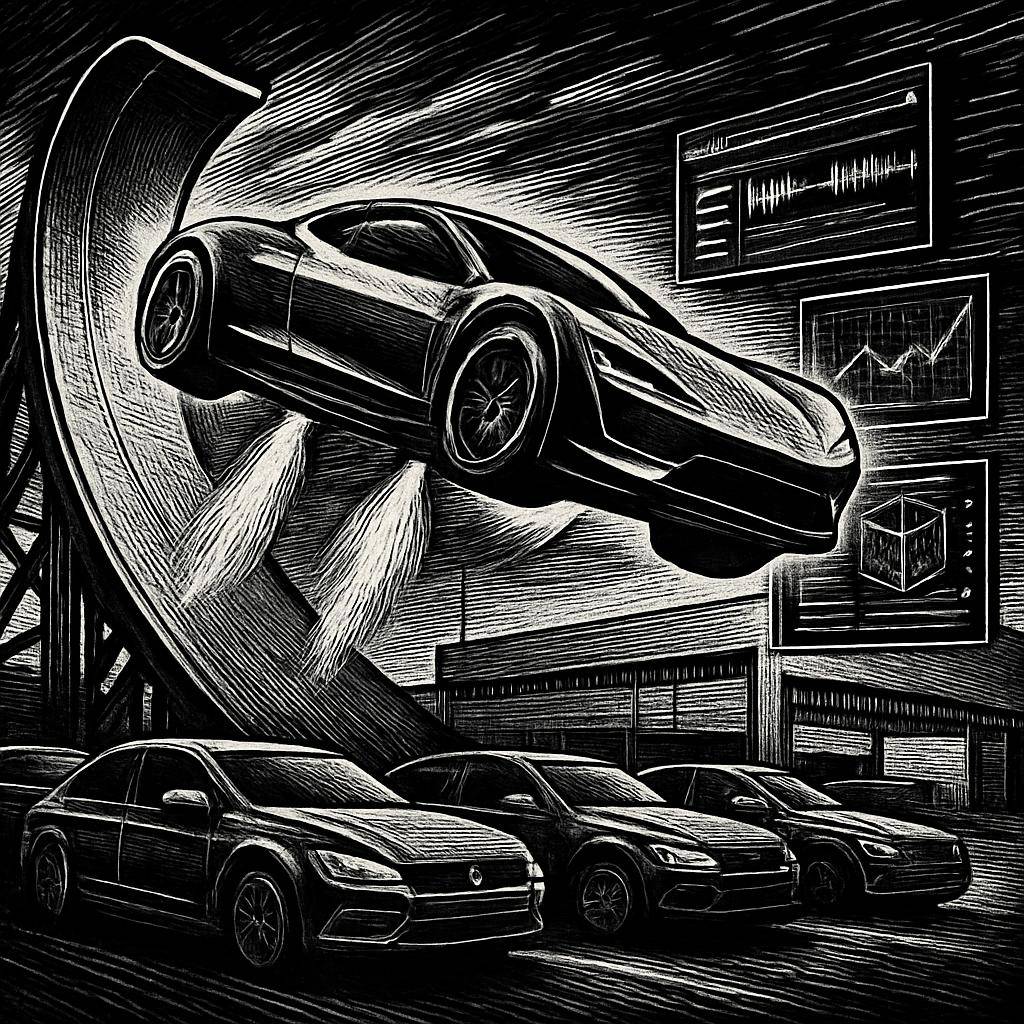
Andrew Mayne: For those of you who didn't see, you know, they, they, they, they, what they did is they used these cold thrusters, you know, basically just compressed gas. And they made the Tesla. Tesla, and again, for the two people who somehow didn't see this, did a couple demos. The first one was they had the car drive, and nobody's in the car, by the way. They have the car drive, and God, we don't know how much space is taken by the thrusters or whatever. I don't know. It's cool. The car drive towards where they had the, they had the tractor trailer truck, the whole lineup of Tesla cars, and the car just jets of compressed air just fire, and the car just shoots up vertically, does a barrel roll over the vehicles, and it lands back again. And it was, like, amazing. They did that demo. Then they had this huge ramp that does this huge curb, multi-story ramp that literally curves back over itself, like, vertically, like, completely upside down. The car has a suction system so it can pull itself towards the road, drives up the ramp, up upside down, flies off the end of the ramp, upside down, thrusters fire, writes itself up, and it lands.
Brian Brushwood: It was actually kind of agonizing to watch this video because I spent the vast majority of the demo, like, unable to engage with it because I didn't know what to believe. I didn't know, is this a mock-up? Why is it halfway up and just sitting there? Why is it upside down? Is it on a track? Is it maglev? And so I spent so much time doing that, and of course, this is probably by design, is that then I had to go back and watch it again a whole bunch because then they explained, oh, there's suction, and it might be useful for cornering and high speeds and all that stuff. And yes, I'm with you, Andrew. Like, the way this thing flips around, I mean, obviously there's no human in there, and for all we know, underneath the shell of this thing, it's nothing but compressed gas just being flung all around. But it doesn't matter. That is one thing that Elon Musk always has had a knack for is, did the dream happen? Did you just see it? Well, then there. Like, who cares beyond the rest? I don't know if there is anybody else on the planet currently that can put together the kind of physical engineering teams that Elon can and does. Like, if you look at the stuff that they've been able to do and the fields they've been able to pioneer that were thought to be impossible or, you know, that you weren't going to be able to get things down to a certain price, like, they've really broken barriers. And Tesla began as a high-end car company, and I think that now they're looking at another high-end car. There's going to be people that are really going to want to buy it.
Andrew Mayne: But the cope was insane, though, because I heard people like, well, you know, Porsche could have done this, too. I'm like, yeah, because they would just go to their, you know, their whole company that they own that makes rockets that fly people to space and say, send over your cool press people.
Brian Brushwood: But again, I'm willing to cede that from an engineering perspective, they absolutely could have. But did they have the YOLO attitude of, like, let's actually do it?
Andrew Mayne: I don't think they could have. I don't think that they're building, they have the in-house systems for building the whole reaction. Like, yeah, 10 years from now, maybe, like, Europe could build a Falcon rocket. They never did. And I just don't. I'm like, I just don't. I think that they're like, oh, yeah, it's any car company could have done it. We could have done it, too.
Brian Brushwood: Well, but this kind of gets to the, like, if you could have invented Facebook, you would have invented Facebook, right? Like, there is a mile, there are miles and miles and miles to go between having the ability and doing it. There's miles to go between having the ability and having all the ingredients and doing it. Oh, I love this thing. When it comes to AI, like, there's, you know, you can have everything you need and you can be unable to get all those pieces together to do it. Now, it's Elon, it's Tesla, who knows when this is going to launch, who knows for what amount of money, who knows with what features. I don't think, to Andrew's point, the jets will be available for parallel parking on the streets of San Francisco. You know, that being said, I don't know who else could put that together. I don't know who else could package it the way that they did. And Tesla today is, again, the most talked about car company on the planet. And that is, that's, that's crazy.
Andrew Mayne: I, I, Ars Technica headline, Tesla turns to 50-year-old stunt technology that tries to roadster again.
Brian Brushwood: And that, am I, well, you probably know more about this than I do, Andrew, but, but that's what I thought is, you know, the jetpack, you know, there's always at a Super Bowl or Rose Bowl or whatever.
Andrew Mayne: I, you could, yeah, you could go like, like, you know, oh, that, that we sent astronauts around the moon using old Chinese technology for rockets. You know, I'm like, I'm like, yes. I'm like, like, Matt's doing a lot of work there, you know, when it's like, you look at, you're watching the replay of this and you look at the precision and the speed, the stability, this sort of stuff. I, I, it is, it is, and even Sam Altman's like, that was impressive. And, you know, Sam's, you know, being sued by Elon right now. Elon has just been very bitter about that and towards, you know, Sam and Sam's like, yeah, no, that's cool. And I say like, this is, it's like, uh, uh, it's the cartoon of like the hot dog on the skateboard and people go look at that stupid thing. And something's like literally the coolest thing ever. I mean, like, I want to do that with a cover with a skateboard lying like the car. Cause like, I'm like, yeah, I'm sorry. Literally the coolest thing ever. Yeah. Yeah. I just say, I did not early today. Like I ended up watching on the subway as I drove in the city. And if you had told me what I expected to see, what I expected to see up until I saw the tower until I saw the tower, I'm like, yeah, it'll, it'll, they'll maybe have some thrusters go off and it's going to hop up a couple feet, you know, and, and we'll be like, oh, that's kind of cool that it can do that. Or use some thrusters. Or use some thrusters to get some acceleration. Like the Batmobile flying. And it just goes straight up and not out. Remember that, you know, the Batmobile plane, we would turn on, it would just be like, like a marshmallow on fire, not a jet. The old one. I wasn't. And then once I saw the tower, I'm like, wait, wait a second. What? Because I heard they canceled it because of wind conditions. I'm like, yeah, right. What a great publicity stunt. We were going to fly, but the wind conditions, you know.
Brian Brushwood: Oh, did they leak beforehand? Because to me, part of the wonderful nature of waking up to this was not having heard anything about it. It's like waking up and it's just like reality is backwards.
Andrew Mayne: Well, it's what happened. No, they said, they said they were going to, like, they were scheduling for several days ago. And they said, hey, because of wind conditions and it was publicly known. He said that, yeah, we're scheduling. And people are like, how do they keep it a secret? He has. He's told everybody. We're going to use cold jazz thrusters. It's going to fly. People are like, yeah, yeah. He said it on Rogan.
Brian Brushwood: The Rogan clip went viral again today. Well, and I don't blame anybody losing the signal in the noise because he was also talking about how cyber trucks would be watertight. You'd be able to paddleboard to, you know, South Padre Island.
Andrew Mayne: Yeah, he just says a lot of stuff. And some of it comes true. And this was a case where he's like, I'm going to put a cold thrusters with the thing and make a kite fly. It'll literally fly. Like, yeah, Elon. Okay, same hyperloop. Wait for that, too.
Brian Brushwood: It really is. It's like every so often my inner skeptic shakes his head and be like, God damn it. You know, like, okay. It's like a hurricane Elon comes in. It's like, ugh, all right. Yeah, but whenever timelines come out of his mouth, I swear my ears are just attuned to Charlie Brown adult sounds. And it's going to be available. Wah, wah, wah, wah, wah, wah, wah, wah.
Andrew Mayne: Yeah, I think this is a good test of kind of people's critical thinking skills is like how you'd cope with it if you don't like him or whatever, you know. And I'm seeing this. Would it really fly? I'm like, I literally watched it leap over five cars without a ramp. I don't know what else you call that, you know. Do you hold out a stopwatch and say, Superman, I'm sorry, that was 45 minutes. Technically, that's just suborbital, you know. I'm like, it flew. It can't fly very long. It's got like four seconds or three seconds of flying. But it flew. It was Knight Rider for real.
Brian Brushwood: So this, when they displayed it, was that a live demo that they did or was it prerecorded?
Andrew Mayne: Yeah, that was live. Oh, my God. That's so bonkers. They did. They tested it during the day, apparently, too. And the thing is, like, how did they test what people know? And I'm like, they tested it at a rocket factory with engines firing, you know.
Brian Brushwood: So, I mean, I can only imagine how many times they tried that to the point that they wanted to do it live for the live stream. Like, that's, I mean, all credit to them. All credit to Tesla and Elon. Elon, I think the car looks phenomenal. All the specs, the gearheads are freaking out about, you know, exactly how fast. I'm sure it's going to handle like a dream. And everyone's going to talk about that, you know. I don't know where you're going to be able to do it. Probably three places in Saudi Arabia and, you know, Elon's fun little test track in the Rio Grande Valley. But other than that, like, are there going to be a lot of people who will pay to flip around in a car? Hell, yeah, there will be. It'll be the most talked. It is today the most talked about car on Earth.
Andrew Mayne: Yeah, and unfortunately for Porsche that had their unveil yesterday.
Brian Brushwood: Oh, did they?
Andrew Mayne: Good luck, man. Yeah.
Brian Brushwood: So the, this is, what's wild is the side effect after, you know, because we're spending all our time arguing about whether or not this counts as a flying car, the one thing none of us are questioning at all is whether or not Knight Rider Turbo Boost is now definitely built into this. Like, like, of course, I mean, if it's flying, now we could argue about how practical that is. None of us are arguing about the 0.7 seconds, 0 to 60 time or whatever.
Andrew Mayne: Yeah, I, I, uh, I'm getting on my, my, uh, X, like, but it wasn't a roadster. It was a shell made to look like a roadster. And I'm like, yeah, you're probably right. I don't, all I know is I watched a thing do a really cool thing. And so I think it's very cool. Uh, you know, I think that, uh, I think that it, it, it's a really cool, like, listen, American dynamism, you know, uh, very, very cool to see like what can be done. I think it's awesome to see like technically this thing. Like I just, again, I, if you asked me 24 hours ago, you know, what was the, what did I think I would see?
Brian Brushwood: Not this.
Andrew Mayne: Yeah.
Brian Brushwood: Not this. Well, and also it does make it so much more electric knowing that there was a non-zero chance of like a, a cyber truck window moment. You know, of this thing just exploding or something. That's another thing is like, you kind of, he's got the cred built up where it's like, yeah, maybe we'll all gather around to watch him throw a steel baseball and crack a window. And then just say, well, LOL. And that's the other thing is how sloppy it drives me batty. How sloppy the presentation is, how something so amazing could happen. And then there's just flat dead air. And they're all like, yeah. So, oh, cars can fly now. And I'm just like autistic engineers.
Andrew Mayne: Yeah. But that is the thing, though. It's the most flat presentation. So, let's do this thing. You're all like, all right, nerds, let's see where this is going. They're like, oh, my God. What did you do? I mean, that's the, that's the ultimate thing. It's just, you're, you're just not, you're not expecting it. And then, you know, our frigging flips over four other cars.
Brian Brushwood: My favorite tweet about it was that finally a car has solved parallel parking.
Andrew Mayne: Oh, yeah. Yeah. I'm, I'm going to classify. Oh, there are people already circulating that they think it's faked. We saw this with the reusable rocket, the landing. Yeah. There was this, oh, it's CG. It's too perfect. Look, CG. Can't be real. I'm like, all right, folks. Like, I mean, you have to be like flat earth level. I mean, I think it's a testament.
Brian Brushwood: I think it's a testament to our mental model of when we've, when we're seeing something that we have literally never seen before and have never conceived of seeing, then it used to be 10 years ago, we, we would have said CGI, but now we are trained to say AI.
Andrew Mayne: Well, that's what they said with the booster. As they said, it looked too perfect. It looked like Blender, you know, what it was doing with the tech. And I'm like, like, I get it. But you're saying that at that point, this big, this defense contractor is going out of their way to fake this, to tell you it's real. Like, it sounds like the stakes are really high.
Brian Brushwood: Let's talk about that suction technology and what's going on there. Is, is that just like some kind of, what does that look like under, under the carriage?
Andrew Mayne: Um, I mean, it's, they, they show you when you could see, cause when the car does a barrel roll, you can see the underside of the car. Um, there are car, there's another car, another demo. They show up another car that does that too, or just sticks upside down. I don't, I don't know. It's not technically super hard. You just have to be close to them to get pretty good vacuum to be able to do that. Um, but I mean, like, you know, lots of people do it.
Brian Brushwood: Um, but no, that's so crazy. Well, I mean, that was not a person in there. Cause that was the first, that was the first demo. Yeah. That was the first demo was them on the inverted ramp. And initially the magic trick of the demo is that you think that the, the suction is the point. And it's like, Oh, look, the car is going to go all the way up this ramp. And you're like, Oh wow, that's really cool. That's really impressive. Then it flips off and you're like, what the hell is going on? Just, I mean, it does, it does look, it looks so precise, but that's, again, it looks more like a SpaceX rocket than something else, you know, like that's, that's what it actually looks like. Yeah. It was fun just instantly having my brain recognize, you know, those familiar, uh, what are they called? Cold, cold jets on the side. Cold thrust. Cold thrust. Blasting in there.
Andrew Mayne: Yeah. And apparently, I mean, again, you know, it's an Elon statement, which the physics will test out whether or not it will make it through manufacturing, deliver anything else like this thing that surprised me too, is that not nitrogen. It's literally, they've got a compressor inside the car that is compressing the air. It takes like 30 minutes to refuel it.
Brian Brushwood: Oh wait. So it just takes energy and it gets its own. It just sucks in the mass and compresses it. Yeah. Wow. Wow. Oh man, it really does. When it flips over, it looks like a freaking matchbox car is that bottom because it's got to be so flat on there.
Andrew Mayne: Yeah. Our friend Randy Pitchford was there. Uh, he was there live to see it. Oh, I bet that was great. And Randy was great because Randy owns the Magic Castle. Randy's like, I'll be under the Magic Castle. I was like, this is the most amazing thing I've ever seen. And I put the David Copperfield levitating the Ferrari underneath in his tweet. And Randy just retweeted that. Like, I know I've seen this before. Yeah.
Speaker 02: Yeah.
Brian Brushwood: So bonkers. Well, also it's, you know, rumors that, uh, there's going to be a Tesla SpaceX AI merger in the offing.
Andrew Mayne: Yeah. I don't, I keep hearing that and I don't, I don't know. You'd have to have, it'd basically have to be SpaceX doing a buyout. Yeah.
Speaker 02: That's what, uh, that's what the rumor is. You know. So anything else happen this week, gentlemen?
Andrew Mayne: But I say it to say it's hard because like Tesla stock is like 1.4 trillion. And so, uh, SpaceX stock is 1.9 trillion. So, I don't, I don't know. Yeah.
Brian Brushwood: It is not, not much more of a bigger fish to, to eat it. I mean, I guess the question would really be, it's like, all right, does it benefit everybody to bring it all under one roof? Although, I don't know how much more of a roof it's going to be brought under if it's technically owned by, it's all owned by Elon. So, I don't know. I'd be curious to see if there would be static or a shareholder involved.
Andrew Mayne: Yeah. You get it. You get the key man risk too of like, I don't know, Elon decides to test it. Uh, I knew, uh, I knew Elon's car is insurance guy and I met him in actually Magic Castle. And, and he, he said, yeah, it says, uh, like Elon had bought, I don't know, it was like a McLaren or whatever, brand new one, whatever, and realized the insurance was so expensive. And there's a story that Elon takes a friend for a ride and just spins it out, whatever, and crashes it. And he turns to his buddy, because the funny thing is it's not insured. So, and I knew the guy like, yeah, Elon called me, gave him a quote on it. He's like, all right, Elon decided not to insure it.
Brian Brushwood: That's funny. Was it, was it the Nate Silver book where he talks about the moment that he's driving with Peter Thiel and he took a corner too fast and it, uh, caught air and it flipped over and it was basically literally a coin flip. We live in the timeline where whatever the crazy car was landed, you know, belly side down, uh, but it could have just, you know, landed on the roof and crushed them. And, uh, uh, it's this book about, um, uh, the type of risk takers.
Andrew Mayne: Yeah.
Brian Brushwood: Yeah.
Andrew Mayne: Yeah. I, I do think there is that, that how you look at something, you, you know, a mortal like me sees this and gets scared and other people see this and get exhilarated by risk and the venture and venture.
Speaker 02: Hmm.
Brian Brushwood: Yeah. So what, what, what, what, what, what until this morning was the most interesting thing? What was our headline going to be?
Andrew Mayne: Uh, uh, I mean, uh, I, I got up, uh, 5am to go order the iPhone duo. Ooh. Uh, yesterday, cause I got the day wrong. I go sit in front of my computer, I'm logged out on my writing and I'm like, wait, does that say the 16th? I'm like, Oh, Oh, back to bed for you. Um, so was that today? And then, yeah, that's today. So yeah, I went and ordered it though.
Brian Brushwood: Yeah. Fortunately, I was juggling. I did not do my due diligence. I did not. I kept thinking in my head, ah, I got to figure out whether or not I want to use an AT&T upgrade and blah, blah, blah, blah, blah. And then I, I dilly dallied too long. And then I had my hands full with, uh, the kiddo this morning cause my wife had to go to the doctor. And so my stinking phone isn't going to show up until November, but, uh, or December actually I think it's early December. It's supposed to get here. Whereas Andrew, uh, Andrew's going to get his tomorrow.
Andrew Mayne: Oh, wow. The 20, 23rd, the 23rd. It's a, it's a 23rd's initial.
Brian Brushwood: Tomorrow in geological eras. Yeah, exactly. In dog years, it's tomorrow.
Andrew Mayne: Yeah. Uh, yeah. And we were originally going to be in Austin on Friday next week, but good news. We'll be back in time for my new iPhone. Um, I spend, yeah, it's been a very interesting week with a lot of different, you know, Hey, AI models, keep getting better, doing cooler stuff. Um, that's been, you know, kind of like a big shift there. Um, trying to think of like, gosh, like, I mean, I've been using my dots more and more like dot has been just been like, you know, super useful.
Brian Brushwood: I've, it's like revolutionized social media posting for me. Like the, I do a lot of content in video now and I have not made a lot of short form video because it's time consuming and, uh, frustrating and I'm not good at it. Uh, dot's a lot better at it and I can just tell it the kind of clip I want and it just cuts it out. And, uh, you know, like for example, I've, I've even expanded into kind of breaking news stuff. So the, you know, Katie Zachariah, the press secretary was fired. I sat here right on this set and I talked to the camera for two minutes. I hit stop and then I told dot, I just recorded it. I want you to pull the following B-roll, cut it, post it. It's up right now. And in, in the in between time, I did the dishes and got my sick daughter up and, uh, uh, you know, and, and did, did everything but either editing or posting the thing. And, uh, it's, it's been phenomenal. It's been great at just like filling the gaps on stuff. This is, yeah, we've had short. I'm sorry. Mm hmm. Yeah. Here, I'm taking a look at it right now.
Speaker 02: Oh, wait, where's the, there we go.
Brian Brushwood: Yeah. Look at that. Well, that honor now goes to Katie Zachariah, who has been fired after one, two, three, four, five days on the job. And, uh, she does not make it out. Oh, it did a little crossfade there instead of a harsh job. This took one press briefing, uh, one scandal where there was a question as to exactly how and where, you know, what's interesting is, you know, the default thing is like, that's a job that could have gone to a human, but it's like, who are you cutting out? Opus clips, maybe. I mean, even then, Opus clips, I couldn't get exactly what I wanted. I couldn't just demand it get B-roll. I couldn't demand to put it together and have the exact style that I want. Like everything had to be touched a lot more. And, you know, that is one thing I really like about dots is that it, it will hand you a cookie cutter solution to things, but because it's watching what you do and it knows what you eventually are going to want it to look like and be, then it encourages everyone to kind of grow their own unique style out of it. And it's more reflective instead of paying money to get, to borrow the tastes of some other company's designers. It really does. It works with your tastes and kind of grows and polishes based on that. Well, I've found, at least for my stuff, there's kind of three levels. There's how do I do a good job of what I would do? That's level one. Like, what have I thought I would do if I had the time? Tell it to do that. And then there's, what if my stuff were the best, among the best in the field? So you look at what you consider to be the best in the field and you tell it, hey, study this, understand what makes this good, what makes this bad. Let's always stay away from the bad things. Let's always stick to the good things, blah, blah, blah. And then you tell it to do that. That's where I'm at right now. I'm at like, okay, my clips are somewhere between Bill Simmons podcast, social media, and the New York Times, which is kind of where the brand of my show is in general. So it's like, that's a good place that my social media stuff should look like. The next step beyond that is, what's the me-specific thing? What's the, what unlocks the creative element that makes my show different and interesting in a social media format? And then the step beyond that is, okay, well, why aren't I including that more in my show myself? Like, how do I continue to infuse all of this? The one big thing that I just want to underline for everybody is that among the things that we have to uncondition our brains in this new world is, A, taking things off the table as possible because they, you've rightly determined that it takes more effort than you have time for. Like, there's a whole element of our brain that we've just shut off because it's like, that'd be cool if I had the time. Now you have the time, quote unquote, because there is this kind of different work ethic. But then number two, what would you do beyond that? And that's like the kind of unseen layer that will, I think, really define the next decade, two decades, three decades, however long this is the thing, is like, okay, if you're really unrestrained, where do you run? What do you do? And then where does the market find place for it? Like, I've been thinking a lot about that. Like, you know, what are the form and function that define our modern era? And what would it look like? You know, like right now, dots means IPX3 has more social media footprint. That's cool. Which basically means, I sort of think of it as almost like a fractal where it's just like, there's all these individually, like the coast of England, micro, micro, micro, you could always cut that up into a smaller piece and a smaller piece and a smaller piece. And if you're an individual person, now corporations, big media players, they've always had the resources to fill in every single gap, right? So it's like, you know, Bill O'Reilly goes on for whatever back in the day. And then that would get carved up into chunks and segments that those would get carved up and those would get carved up. And so as a result, whatever your creative entity is, is able to fill all of the cracks down to the smallest level, to the atomic unit of storytelling, a tweet. But if you're an individual, that was just not available to you. You did the thing and you did it as good as you could. Maybe if you were popular enough, fans would do it or you could grow into hiring enough people to do it. But now there are resources to dedicate to reaching more people because there are people who never in a million years will give a try to your hour long thing, but they don't mind bumping into 30-second clips of it from time to time or even smaller pieces. It's also just reminding people that it's there, reminding people that might have heard it that or also just like there is just another currency of being in the attention economy. That's another thing where it's like, OK, I've never wanted to hire somebody for it because it doesn't actually make me money. But would I play if it were free? Yeah, I will. Or, you know, essentially free because it's a tool that I'm using for other stuff. And it's actually made me money because it's able to also delete other things. Like, yeah, there's a jinx jinx asks chopping up content. Was it available to small content creators? This is the fallacy that that I think people are not realizing is that, of course, the tools have been available, but the time is not. And time is different now. You now have the ability to have unless you are the CEO of a corporation. The idea of going to sleep and then waking up wealthier is something that most individuals have never had the opportunity to do. And now it's democratized. Now you can build a project such that you could be this far along in it, go to sleep and then wake up and it's farther along. So just to give. Yeah, sorry. I just want to give context. So before. I would record a thing. Maybe you would go to a place that automatically cut stuff up and then I would have to find the B-roll. I would have to place the B-roll. I have to work within that system to do it or I'd have to hire somebody to do it and they would have to be available for at my beck and call to go and do this. Here's what happened. I recorded that and I wrote the following. Okay, there's breaking news that I just recorded a short on Riverside's PX3 room. I need you to take a look at that, find the last take, package that together, get B-roll on Katie Zachariah, Anthony Scaramucci, and a clip from Katie Zachariah on Hannity. You can probably find them on social media, but we need to turn this around as fast as possible. It then writes back to me. It gives me a cut. I approve it. And then I had it make a cover for the YouTube shorts and it was up and it misspelled her last name. I told it to change her last name. That's what I did. I wrote, I recorded it, and then I wrote those things. And there's never been a product that has been close to that level of competence.
Andrew Mayne: There's this fallacy, like this economic fallacy that I think half the population kind of falls for and doesn't understand. And you'll see this, like, you know, I see politicians talk about this, like, oh, you know, we did this incentive and, you know, billion dollars were spent. And you find out they're tracking the same dollar being, you know, I pay Brian a dollar, Brian pays Justin a dollar, Justin pays somebody else a dollar, and they count the dollar five times and go, look, you know, look at all that economic thing. That's not how you measure. You don't count how many times a dollar moved around. You count goods and services. You know, I can give Brian a light bulb and Brian can sell the light bulb to Justin and Justin give the light bulb to somebody else. We don't have five light bulbs. We have one light bulb that's only able to do the work of one light bulb. And it's, you know, there's the Soviet, yeah, apocryphal story about, you know, the Soviet Union where they had, like, a car manufacturer and had a car repair facility, and they would ship cars and then smash the headlights so the car repair facility had enough business to keep it going. And it's like, you know, you say, oh, broken windows. If I break windows, what's job for the glassmaker? True, there's less glass. I want to go build a greenhouse. I can't because there's not a glass to go do that because we're busy breaking glass. So when you think about Justin here and saying, like, yeah, I did this thing in 10 minutes. Otherwise, I would have spent an hour doing that. But now I get to spend that hour watching the news or doing an interview. And what do we get? We get a better product. We get a better show rather than him spending his time having to do that. Like, you know, I could, I could, somebody could never invent a pencil sharpener. And I could buy pencils unsharpened and take a knife and have to sharpen all my pencils and say, okay, that's cool. At least I made it myself. Well, great. That half hour, literally nobody benefited from that. Zero. And so I think that we're seeing this. We're going to see more and more of this. Like, there is no end to the things that I want. There's no end to the things that other people want. And some of them are goods and some of them are services. And I'm all for, for hiring more people and doing more stuff. Like, great. But if I don't need a person, I won't.
Brian Brushwood: I was thinking about so many things that humans will probably want that, that quite simply were not possible until, you know, the last five years, the last five minutes. But like lately, I just can't wait. Remember when Monster Truck Spectacular was for the Rage and you have Truckasaurus or whatever. I can't wait for real steel boxing with somebody who's in a VR gear and whatever his body does is 30 feet tall and there's a David versus Goliath and robots are doing backflips. Man, that'll be the best. However many hundred dollars I spend to take my family out to that kind of thing. That'd be crazy.
Andrew Mayne: And it will still have, you know, mixed martial arts. Yeah. You know, we're the, I guarantee you in the Olympics, 50 years from now, we're not going to be watching robots running the marathon. There will be some other robot competition to go watch that, which will probably get boring very quick. We're going to go watch humans. And I think that, you know, that's the hard part for people to kind of like, okay, well, maybe there. I'm like, yeah, like, you know, if I, you're going to go to do it. If I, if there are two restaurants, the best sushi restaurant in your city, one's got a guy that went to Japan and spent a lot of time learning how to prepare sushi. One's got a robot that makes sushi. I don't know. If I just want sushi and order in, probably use the robot. If I want to take a night, cool night out, I'm going to go there. There's, we live in a world where we have PF Chang's and Benihana, you know, Chinese and
Brian Brushwood: Japanese, but Matt, Matt Hawley. So, so we had some questions in the chat about what dots are dots are agents instead of just chat GPT, being able to say things dots are ongoing agents that can do things and be in charge of, of projects and so on. Matt Hawley points out that a hundred dollars a month is the plan minimum for, for dots. Yes, that is true. But we've talked about on, on this program before, but the hack that made us justify going three digits on our expenses is it ties in with finance and if you link it to your subscriptions and stuff and you're like, Hey, look at my budget and see how can I justify this a hundred dollars a month expenses? I talked on this program, how in the, my brain exploded when in four hours I canceled $5,000 of annualized subscriptions in just four hours. So it can find, it can, it is helpful if you want to be budget conscious on that stuff. And look, we're a futurism podcast. It probably doesn't surprise any of you that we've, we want to be ahead of the curve. If fire's being invented, we want to know what are all the things that you could do with it.
Andrew Mayne: So yeah, we're early adopters on this stuff, but I, you know, and again, like the, you know, the, the cost of it was, uh, you know, a month ago you couldn't buy it, you know? Yeah. And eventually these costs keep falling on these things. And, and, and, and I'm going to, I got into this. So I, I, I run like an alumni chat or the bunch of former open AI and some current open AI people. And some people are anthropic and other places too. And it's, it's amazing who you can, you know, have discussions with or getting into arguments with and, you know, the whole idea, you know, should, should AI stuff, there should, there be ad supported, should it be supporting ads? And my argument was like, I took my while to come around to ads, but I realized that one, we live in a world where a lot of people are way more comfortable with ads than other people are. Maybe they should, maybe they shouldn't be, but a lot of people would say, you know what, I'd rather trade my time than my money, you know, or my attention than my money for a service. And if you have an ad service, the key is to make it balanced to the idea that you're, you're, you know, Apple's pretty balanced, although there's arguments to be said that they're getting, you know, the app store is really kind of maybe predatory in some regards. But anyhow, if you have an ad supported product, you are incentivized to make a great product for free. You're incentivized to bring in anybody and everybody on the platform and not just people who have pay a hundred dollars. And that's then kind of the difference between anthropic and open AI. Anthropic has free Claude. And I've had somebody, you know, for Anthropics, like, well, we have free Claude too. I'm like, how much money did you spend telling people in India last month that there's a free Claude? Yeah. You spent zero. You'd zero because you don't, you do not want those customers. You don't want them. You want people to try it for free and pay. And that's, that's fine. There's nothing wrong with that. But as long as you're trying to charge, your goal is to always charge a hundred dollars a month for this, whatever. There's an entire category.
Brian Brushwood: And then your next goal is to figure out how to spend less and less to, to incentivize your project product.
Andrew Mayne: Yeah. I mean, and I, and I, I'll assume that a lot of people here, like, I think, I think that, I think that certain companies and certain people, and I think Anthropic and open AI and Apple, like Apple engineers would love to figure out how to use the best material they can. They want to figure out how to use the best material. And they could use a cheaper product, but if they could get away, they probably still wouldn't because they're there. Cause they're like, no, we'd like to use the best material. So I think there's, but some places that happens. You're right with your point, Brian. Over time, when those people leave, that's exactly what happens is that people just say, well, how do we make the cheaper, dumber version of this? But I'd say that like, yeah, like I'd say that if you're charging for it, but also if you're, if you have an ad model, then you're like, okay, now I'm incentivized. I think that's my whole point. Like dots is like, I think open AI's goal is to get, you know, they get 1.2 billion people using chat GPT every week. I think their goal is to get, figure out a way to how to have everybody have a dot, how everybody have a dot.
Brian Brushwood: So for somebody who's price sensitive, I believe from what I've heard, I have not messed around with Muse, the Facebook one. And I personally have trust issues when it comes to anything meta related. But if you, from what I understand, the experience is very similar. If you want to give that a try.
Andrew Mayne: Like, yeah, the, the difference is, is the model powering it is that, uh, Muse, Muse is nowhere near the model behind it. It's nowhere near as capable of Astra. So you'll see examples of people talking about like, Muse just not getting stuff and getting very confused by certain kinds of things, not being able to like prioritize certain kinds of email. Not just that Astra is perfect either, but Astra is like a complete super frontier model.
Brian Brushwood: And, uh, I don't think me, I don't, uh, uh, I'm going to take a wild guess. I have not used GrokBot. I have not used Muse for the things that I'm using Astra for my understanding about their capabilities when it comes to computer use is that they are not an Astra. And by which you mean that's what your computer, like whatever, or its own computer, like, you know, cause dot has a cloud computer. So for example, and you know, dot will be my pick this week, but like Brian and I have been going back and forth on becoming blender fans because we now don't actually have to learn blender. We just have dot and do blender things for us. And, and to, to be clear, long time viewers know that, that I, I became proficient at 3d studio max when I was in college, but in blender is same animal, same idea, same kind of engines, but all the menus are going to have different places. The layers are going to be in different orders. So all of these skills have been locked up. My ability to understand inverse kinematics and volumetric lighting and specular highlights. None of that. It's just been flash frozen in Amber for 25 years. And then, and now I have an intermediary who, who will do the modeling and set up the thing. So then I can start playing around with it. Uh, yeah. Yeah. But I mean, it's like, like, for example, I, you know, I've been doing these social media clips and then I see a social media clip from the New York times and I'm like, Oh, that's interesting. All of their graphics kind of just appear. They have like an animation to that, which gives an interesting kind of like, Oh, that's a visual thing. I'm like, Oh, I should just have that for all of my stuff. So I just told it, Hey, in your blender cloud computer, uh, just create these animation styles. Give me five different animation styles that I can pick from. It gave me five different ones. I was like, yeah, I picked the one I liked. And I said, this is the new standard. Any time that we make a clip, you're going to use that animation style. Boom. Just done. Uh, you know, it's yeah. Similarly, uh, there are, there are stuff like, for example, cord killers is my current project where I keep trying to make it, um, uh, uh, television quality and, uh, we get closer every single week. Let me show you the latest thing that we did. So, uh, the previous animation was this, this, oh, I don't know. Just very, very, very entry level, whatever. But then I, in blender, I said, Hey, remake it in blender. Look at that. And then now you get, uh, a layer over it. You can see Tom merits there, uh, in the transparency layer comes in over him. Um, there we go. And there's actual geometry right here. There we go. So I had never messed with stingers before. I knew what they were, but then all of that is rendered model geometry in blender that I was able to change the textures on. I was like, no, no, no. I want, I don't want gold shiny. I want a brassy brushed metal. And then now, now the trick is you still have to know the secret keywords to describe what you want. I mean, you could just wave your hands and say, make it look awesome. But of course, ultimately you have to develop an eye for what it is you're asking for.
Andrew Mayne: I think that's the key is that we talked about this analogy before how, you know, we watch, uh, you know, you watch a really good movie and you see VFX and you realize, oh, this director really gets it. And a lot of times, like, I don't, I don't know that Denny Villeneuve is going into, you know, my, or whatever suite that they're doing to do the graphics and stuff for the Dune movies and is actually moving around, you know, the, the different, you know, functions and all. Pixel by pixel.
Speaker 02: Yeah.
Andrew Mayne: Yeah. You know, telling them like, no, do this, use this tool. He might. And I think Denny's a good director.
Brian Brushwood: There is one case and I love, I love this, but, uh, we know for a fact that it was definitely JJ Abrams who made the loss in lost intro in light wave. And, uh, there are artifacts of a poor rendering in it that they just never fixed. There's like three frames where one edge pixelates on the side and there, it drives me totally batty, but, but, but yes, I mean, I use, I use Villeneuve specifically because there are
Andrew Mayne: guys that do know it, you know, like, like, you know, Kane Parsons who did back rooms. He's very much into Blender. There's some people who are just so very, very, very much wired into the technology like James Cameron, but I use Villeneuve because like, I don't think he knows. I think he has the best looking effects of anybody. And he may be if some of the more technical ones. Um, I actually know the guy who made the lens flare effect for Abrams, like Abrams talks about like, Oh, we do it in camera, whatever. Like it's a good story, JJ, you love stories, but I know the guy that built your lens flare effect that you went in to go add all that, which you could have pulled out, but you said, no, it's in camera. Um, but anyhow, that's the thing is that it's, it's that when Leonardo da Vinci, when you go look at a studio, you often think that like, Oh, it's just, you know, it's just a guy. Well, sometimes they would have like for the big murals and stuff, there'd be people who are just specialized in the hands. They had specialized paint mixers, people who just did all these different things. And it's good as an artist to understand enough, you know, an airplane, uh, an airplane pilot should understand how the engines work. They don't have to be able to strip it down and rebuild it. But I do like an airplane pilot that understand their dynamics. But yeah, I think we're in this age where, yeah, you don't have to know every little detail. You just have to know how to get what you want.
Brian Brushwood: Yeah, I recently spent the last couple of years, you know, doing an audit of my whole operation because there were giant chunks of it that were black boxes to me. But it was wild to go back and relearn how to cut videos first with a simple editor and CapCut, then get back with Adobe Premiere. And then eventually I found myself getting far enough in the weeds that I had to on purpose back away because I knew I'm approaching a cliff. And on the other side of this cliff, I will chase perfection and none of my time will go to writing things or appearing on other shows or getting up and coming up with new products for the store, all that stuff. And so, uh, I think, but that level of intimacy, you know, you, you write, produce, edit, cut and post 1000 shorts in a couple of years. Uh, I'm very thankful for that experience and I'm also very thankful to be offloading it to, uh, to a robot that will follow my exacting descriptions.
Andrew Mayne: Yeah, I think that it's kind of back to the point before of that these things that, you know, we're going to get layers of abstraction away from what we do. And sometimes people are going to be specialized and go deep down into understand it. And there is just, uh, uh, a paper that came out that got a lot of attention, um, from a researcher who was talking about interoperability and like the big models. Cause the big, the fear is we build these big models and we don't really understand what goes on and can we be plotting or whatever. And he's made some claims. A lot of them think he's on a good path, but it's like, no, I think that we can, we can actually understand and interpret this. And, you know, there's going to be people working on figuring this stuff out, but then, you know, I don't, I drive a car. I don't, you know, I, I can't build a battery.
Brian Brushwood: You know, I think this is one of those, I strongly suspect that we use, uh, interchangeable language where we should not, when we talk about a single person versus a group of people when it comes to intelligence, uh, even when we have super intelligent AI, unambiguously super intelligent AI, it will definitely be smarter than any one person. I am not convinced it can ever be smarter than the sum of all humans, unless, unless, uh, humans consciously make the decision to not, uh, try to be smarter in it than anything. And, and this is, I know this is something where we are on different tracks, Andrew, but, but, but, but my point being, uh, a, a group of people are, there is a super intelligence in a hundred million humans that is superior to, to, uh, anything.
Andrew Mayne: Well, I, I, but I mean, I don't, but is there, if I have, you know, a billion systems though, like, I mean, I, I understand what I'm saying.
Brian Brushwood: Well, and understand my, my, my theory is that calorie for calorie, there's nothing more efficient in turning the sun's energy into things human wants than the biological wetware that's in us. And so I, I'm thinking just in terms of the lossiness of, of synthetic systems out there, uh, however many, there would have to be, you know, uh, computers would have to outnumber humans by a significant margin to approach parity.
Andrew Mayne: Why don't, I guess we have to say what we're trying to do. Like right now, mathematics is wrestling with the fact that GPT pro was able to, one GPT pro session was able to output more mathematical proofs than the entirety of all of the mathematics, you know, teams have been doing in the last couple of years. Like literally decades long stuff just came out from one little, Hey, let's yellow and run that. So it gets to be hard. I don't, I don't, but to your point, I think like I've had this, like, I don't think we ever build a AI system that can predict our wants. It's like, that doesn't happen because that is, you know, like, like that's, that's so it's even the physics of, you know, people like, Oh, we'll build neural, it's like even to figure out what's going inside our brains. Do we want it is way harder than what we have. But, um, I don't know. I mean, I think if you say for tasks, like, yeah, like I think that right now, uh, AI mathematicians are fastly getting better than mathematicians and I can throw more of them. I can throw tons of them at it and that's going to go to other fields. But, you know, when, as humans collecting, you know, we talk about, you know, Hey, like used to see 20 ads a day. Now you see 10,000 ads per day. I'm like, yeah, like we, we, we take in 10,000 experiences per day. And that's why AI slop can still feel like AI slop because it's trying to make a prediction based upon what it was trained in or whatever. And it doesn't quite fully understand what we have.
Brian Brushwood: Um, well, and that's also just that, uh, uh, that's another thing, you know, I think around a year ago, there was a fairly decent size panic about, Oh, anything can be fake. Humans will be fooled left and right. Seems like we all got really good, really fast at just shrugging. But even, even the top story of today, flying car, but a lot of people are still, as we speak, like maybe, I don't know, maybe any of that. Yeah, yeah, I mean, the, the, the, the, the fidelity part, the, the question is how we react to it, because what you have seen is that a fake image can kind of rule the day for a period of time. And if that truth is useful, then people will run with it one way or another, and it'll just kind of linger in the air. The question isn't whether or not we're going to be fooled by it. The question is whether or not we build systems around it to lessen our dependency on it. And I would suspect that we will in the same way that we've always kind of inherently built systems around, uh, things that are useful to us and being deceived necessarily is not useful to us. We, we do like narratives that benefit us, but I don't think we like just out and out being hoodwinked, like being made to feel the sucker does not feel good.
Andrew Mayne: Uh, you know, there was a, a stat that came out, you know, the pig, pig butchering, the whole thing where you get a text message and you're like, ah, I guess I should respond to this, blah, blah, blah. And no crypto, this girl, she's cute. Don't tell my wife, uh, bigger now than cocaine. More money is involved in that scam than, than that. And if you want to make an argument, why we all need dots, why we all need these things is that these things are, why do we not fall for this? We don't fall for it because we know what they are. And our friends have told us what the signs of it are and do that not because we're any smarter than people who fall for it. We just have that information.
Brian Brushwood: I mean, I would make the argument, this is going to be the argument for digital companions for which I have a very complicated, I do not think are great, right? I do not think that these are good things, but if you were to make an argument for it, it's, uh, the downside is people who get caught up in pig butchering scams because part of the reason why we don't get caught up in it, besides the fact that we are aware of this phenomenon, and we know what the term pig butchering is, is that by and large, we live fairly fulfilled lives that are connected to other people. Other people rely on us. They depend on us. We have a good relationship with them. When you hear about the people that get caught up in these massive pig butchering scams, the money is secondary to them at the end of it. The thing that they miss the most is the companionship. The thing that they miss the most is that they were talking to somebody who seemed to care about them every day. That's what the hack is. The hack, the exploit on a pig butchering scam is not a clever way to get your phone number. You know, like, that's, that's where, you know, oh, go buy, you know, Amazon gift cards. That's, that's, that's a panic hack. Pig butchering is loneliness, isolation, filling somebody's cup with that, and then when the money leaves, the money leaves. Is there a world where you can fill that cup a little bit just to have something come back to you immediately on your schedule because you want to outgas something? Maybe. I, I, again, I, I have a very complicated thoughts about AI companions, but like, when the downside is a slave for the Chinese mafia that's going to, uh, extract hundreds of thousands of dollars from your bank account because you're lonely, like, I don't know, maybe it would be better if you'd talk to the robot. There's an audible original series called Only Fantasy that's about the OnlyFans phenomenon and a thing that happens, uh, uh, is that when somebody is, uh, at a certain level of success, they hire chatters underneath them. It's, it's exactly what we were talking about, about taking your broad picture content and chopping it up to smaller and smaller. You know, you, you, you think this, this OnlyFans, uh, companion of yours is always available at two 30 in the morning and always happens to be up just like you or whatever at a certain level, it's sort of a, a mutually understood shared fantasy that there is a... Guys, should I just walk into an intervention? Uh, yeah. But, but, but, uh, uh, uh, listen to this series. It's fascinating, but it opens the door where knowing that people are falling for pig, pig butchering scams and that they're catastrophic financially, it, it, and knowing that there's another version of this same organism in the OnlyFans universe, I can see as somebody ages a legally binding six, seven, you know, 20% of your net worth upon you dying, uh, uh, is, is bequeathed to a team that runs the fulfilling feeling of your girlfriend or boyfriend who's always there and who actually manages your interests at heart. I, I can picture that. I think that's terrifying.
Andrew Mayne: Um, as we talk about incentives, uh, and, and I, I, I, I don't know. I, I, I hear you saying, I think it, I, and I do think that that can form a companionship. I think it's dangerous. It's super, super dangerous. Um, but it's not always companionship. I had a friend who I would say of all my friends who was capable, who has probably pulled some scams. He was kind of a scam artist kind of guy. And he once asked me to go with him to this meeting with a guy at IHOP that was, cause he wanted to get involved. This year is like 20 years ago, right? Says, oh, this guy 25 years ago. Like this guy is like, you know, IPO frenzy, like in.com bubble, whatever kind of stuff right before that. It's like, oh, we got to meet this guy. Cause he says he's got connections to getting in on IPOs. And we go meet this guy who's wearing like flip flops, shorts and shirt at IHOP. And he's like, yeah, my, my son works for, you know, like Goldman Sachs, whatever. And he gets all the hot IPOs. And like, I need, I looking for people to invest, you know, like he can only, I can't, you know, I can't put my money in or I can, I can put my money in, but other people invest my money for me. You know, like I need you to invest my money for me. Like, it sounds great. You know, and I got these hot tips on stuff. And then, uh, and then I'm like, I'm, I'm listening to this. I'm like, I know this is BS cause I know this is not how it works. You know, I know that you get allocation or whatever, how this works. So I'm like, well, this is part of the story. It's not true. And my friend is listening to this like, uh, uh, I think that's now because like now to trust you, you know, I need you to put some of your money in too, you know? And I'm like, this is the deal. I, I, we give you 5k each and then you say, wait for it guys. I'll tell you when, and then I'll do this and then we'll keep going and going and going. And it's like, it was just like, and, and, and, and I'm sitting there and, you know, he's like, what do you think? I'm like, I'm like, I'm sitting from a scammer. Like, this is a scammer. Like, this is amazing. It's like, it's like 60 minutes, but I'm right here. And my friend and, and I'm like, uh, dude, uh, cause I'd work against work with Randy at the time. I said, I can't tell the difference from what you just said in a scam. It sounds to me like this. He did a brilliant thing. You know what he said? He ignored me and he turned back towards my friend is like, so tell me what you think, whatever. He's like, oh, it's interesting and whatever like this. I go out in the parking lot and my friend's like, what'd you think? I go, it's a scam. He goes, yeah, I know. He goes, but what if? I go, no, it's a scam. He's like, yeah, but what if it's not a scam? And I'm like, I'm like, you're, you're going to convince yourself. And this is like Robert Cialdini talks about this and whatever. And how sometimes people, the desire to believe the desire to believe that it is not a scam can be so powerful that, you know, you do that. I would say your scenario, Brian. I mean, the problem is, is that opens it up to like, you know, the Chinese mafia is like, oh, you know, you've got this one service is great, but like, listen, we'll, we'll send a human trafficked person to your doorstep to do all the things you want.
Brian Brushwood: I mean, understand, I'm not pitching my scenario as a thing. I am, I am noting that. It's too bad because I already funded it. The money is in your account. What I am noting is that the, the black market version of it already exists and it's big between and it's the biggest industry on the planet. Right. And so it's like, oftentimes when we have the negative externality of it is that it completely crushes hopes and dreams. And so like we see with org, org, uh, organic systems, uh, especially parasitic or, uh, organic systems, then oftentimes the best type of parasites are the ones that are able to slow down.
Andrew Mayne: The thing is, is that the risk, they would rather get everything out of you now before your family talks you out of it or because before you come to the senses and say, that's, that's the thing of like, like versus a meta, you know, a company like meta or whatever. And their idea is like, they'll take the approach you're saying is like, okay. And I, I've argued that the best system, the thing I'm excited about AI is that I made more money using AI than I did last year. You know, I saved more money. I did more stuff. I can look at what I did and that's an insane proposition. And I'm only now starting to look at my finances. I just used it to do my taxes, save me money on my taxes. Uh, you know, says Andrew while he's still not in jail. And I think that I'm now looking at like one of the things too, it's like I keep way more money in my checking account than I want to because trying to move stuff back and forth is a pain in the ass, but I always need to have money ready for the mortgage, et cetera. And the smarter thing is to actually use like treasury bills and do that. But I'm like, okay, like, oh, great. I got, got to do that. But now I'm like, oh, I can have my dot help me manage that and maybe pick, you know, 15 minutes a week to go manage this stuff and probably save myself, you know, tens of thousands of dollars a year. Yeah. And I think that's what I'm excited about.
Brian Brushwood: Well, and it used to be that that would be like, you know, too much of a cognitive tax on you or you would pay the fee of missing deadlines or having stuff, not be money, not available to you at a moment's notice, what have you.
Andrew Mayne: Yeah. Yeah. Like I'm, I am, I am a pretty, I've been a very solid, good investor. I've been a very good investor. I've been very good at that or lucky. One of the others, I'm a, I'm, I'm terrible at bookkeeping and keeping up with stuff. So I'm often paying penalties and things like that. You know, my justification though, is I don't really stress about things. You know, I just, I, I look at companies, I follow stuff and they say, okay, I'll invest in this now. And then I'll find out like, you know, and then like, I don't, I pay, like, I don't pay really, you know, like I, I just put my money in the market. And then the next year I get like, how much do I have to pay in penalties? Which, you know, accountants get apocalyptic when they hear me say that, but I'm like, I'll show you my returns, you know, like, but you know, if I could be better at both.
Brian Brushwood: So you don't do, when you, when you're buying and selling, you don't do it inside of a tax advantaged, uh, all the stuff that accountants love you to.
Andrew Mayne: Why can't, I mean, I have a step IRA, but I'm maxed out. Right. So, you know, like, like, like for my other stuff, like anytime you, you know, you sell stuff, you know, um, I don't, I don't like, I don't like, I get, you know, you get those coupons for every, when you buy your taxes to say like, here's all your quarterly installments. I'm like, I'm like, cause I'm like, yeah, I'm like, I'll, I'll, I'll, I'll take the penalty. Cause you know, it's also kind of like, I don't know, like, you know, my, you know, I, I let it sit inside of NVIDIA and you know, that's up like, you know, a hundred percent, you know, or 50%, whatever, you know, so do not take advice for me, folks. Do not, do not take advice for me.
Brian Brushwood: Andrew does very well in a Andrew shaped universe.
Andrew Mayne: Yeah. Um, but yeah.
Brian Brushwood: We got any picks? Uh, oh wait, I did have one question before we go to picks. Um, no, I'll save that for another time. Um, finished season one of Lanterns. I liked it. Thought it stuck the landing. I enjoyed the space. I think that's a tone. That's a tone of somebody really excited about a television show. Oh no, no, no. I it's, it's a tone of somebody who's only regrets in saying Lanterns that he's going to have to hear it from Justin Robert Young. That he doesn't like David Lindelof. I've not watched it. I know. No, I know.
Andrew Mayne: That's how big you're hating.
Brian Brushwood: You don't even have to watch it in order to derail. Justin in your head talks way more about Damon Lindelof than the real Justin. The real Justin is the one I'm waiting to talk, to finish talking. I liked Lanterns. I think it's good and I'm really glad I liked it. And I'm sad that Justin will never give it a chance. I, Jesus Christ. I've not given anything a chance. It's I've not watched television in two years.
Andrew Mayne: I, I watched up until like, uh, episode five or like kind of like, cause you get this point that sort of resolves the story to an extent, but then there's this bigger sort of mystery to it. And then I'm like, I don't get to it, but just showed you like my interest sort of kind of like got to like there. I'm not saying I won't, but then I saw a clip of somebody doing something or how something happened and it was so comically bad. And I'm like, okay, I got to get into this because this is just, you know, there's this, there's this thing of like, I heard somebody describe it like Barbie is like, it's so woke it became based, you know? And like, you, you, there's a thing about, you know, female law enforcement that I don't agree with, but I'm like, man, somebody made a case for that. And this clip I saw and I'm like, that's not good. Don't do that. It was funny. So, um, uh, I'm all for female law enforcement. I'm like, very clear. Uh, I'm like, don't give the people who are against the ammunition. Um, well, anyhow, but yeah, I gotta, I gotta get around. You know, I think, you know what I'm talking about? I think so. I'll have to, I'll have to compare notes when we're off the air, but. Well, you know, that show opens with a situation and like, how did this happen? And then we find out how it happened. You know? Well, I'll tell you what I liked.
Brian Brushwood: The puzzle that we were beginning with is, uh, you know, the show's called Lanterns, plural. And then we start with a real lantern and an apprentice lantern. And I'm like, okay, I guess I'll buy that. And then there's other lanterns. And, and, uh, I, I thought the season ended up resolving with a nice kind of, uh, Mexican standoff balance of like, well, there's this, that, and the other. And, uh, it made me hungry to see a second season to see how power would be reallocated in that case.
Andrew Mayne: Yeah. I, I, again, I thought, I mean, like I, I, I strangely enjoyed the Watchmen TV show and I've talked about this before where there was a lot of, and again, that was sometimes they was so woken, some ways ended up being based without them realizing kind of stuff. I'm like, oh, all right. You know, like let's follow this through what you just sort of said here, you know, like the, so the, you know, the, the, the smartest man in the world, the smartest woman in the world, why is she the smartest woman in the world? Because her father is genetically. I'm like, you just made a place for intelligence and genetics. Like that's like, uh, okay. But anyhow, um, yeah, I'll give it a shot. Like, I think that there's some competency there. Um, so I, I, I, I, I will, I will, I will watch it. Um, did I, did I pick Durundar? You did. You did. Yes. Yeah. Okay. Say one or two. Uh, you know what I've been watching now? What's that? I realized it's been so long. I can go back and watch it. Star Trek, the next generation. Oh yeah. I was watching a lot of behind the scenes videos. I made it through all the kind of the good Star Trek films. I'm like, let me just go watch next generation, you know? And it's the first season. It's still in first season. It's interesting. Cause you're fine. They're fine in their footings. And you can see like LeVar Burton's great. Like he just, he just feels like he's a guy. He's been playing in that character, you know, that Geordie LaForge for like three seasons, but it just, because LeVar Burton's just a really good actor with a lot of that, you know, been acting for over a decade before I think he did that. And so you can kind of feel that. I think Patrick Stewart is great, but it's just sort of like how, you know, like, cause remember it was like, oh, he doesn't look like Captain Kirk. And like, oh, that was the idea. And I think, you know, I mean, I mean, you know, it's silly and cheesy and goofy and all that, but it's like, and it's like, and I was like 1987, like, look at this guy in a skirt. Are you ready for the future? Here's a guy in a skirt. Okay. All right. Yeah. I forgot they did that. Yeah. Does it bother you? You know? And then, and then it's funny cause then you watch Star Trek now and they're trying to be so edged. So we're like, dude, like I'm a teenager watching dudes in skirts and stuff. And, and Riker get into relationships with like, you know, we don't know quite the gender is whatever, like they like been there, seen that you're so behind the times, you know, whole, you know, so anyhow, Star Trek, the next generation.
Speaker 02: Yeah.
Brian Brushwood: Look at that. What about you, Justin? What's your pick? My pick was dots. I really, if you want to know the thing that I have been playing around with the most, it's dots every morning, during the day, the afternoon. Here's a fun thing I did with dots last night. Hey, what, what do I have hanging just through a bunch of things? I ripped through a bunch of stuff that otherwise just wouldn't get done. Oh yeah. Done later. Oh yeah. To answer the question of, of, of why dots I was going to share, I went to, uh, did a keynote at a security conference in Omaha and my least favorite part of gig life came up, which is, Hey, uh, we'd like to reimburse your travel and expenses and all that stuff. Normally I just do a buyout on all that. Cause I can't be bothered to chase any of that stuff down. Not anymore. I said, yo dot send them the thing. And they're all like, well, we need receipts for whatever. I'm like, yo dot. And suddenly it's logging into Uber, getting legit real receipts, not just credit card guesses. Uh, yes. Bureaucracy buster. Sweet, sweet bureaucracy buster.
Andrew Mayne: Well, it's been weird.